How does reputation management work for medical device companies?
Medical device companies work under FDA content constraints and sell to clinicians who trust peer-reviewed evidence over promotional language. So the reputation work is compliant clinical-evidence content and credentialed third-party coverage, plus monitoring what AI engines say when asked about safety and efficacy. Misinformation in those answers reaches procurement committees and clinical adoption decisions.
Medical device companies sell to a clinical audience under FDA constraints, so reputation work is built around evidence and compliance rather than persuasion. The stakes are higher here than in most sectors. Patients and clinicians now ask AI engines about device safety and efficacy, and a model can turn misinformation into a confident answer quickly. Those answers reach clinical adoption and procurement decisions.
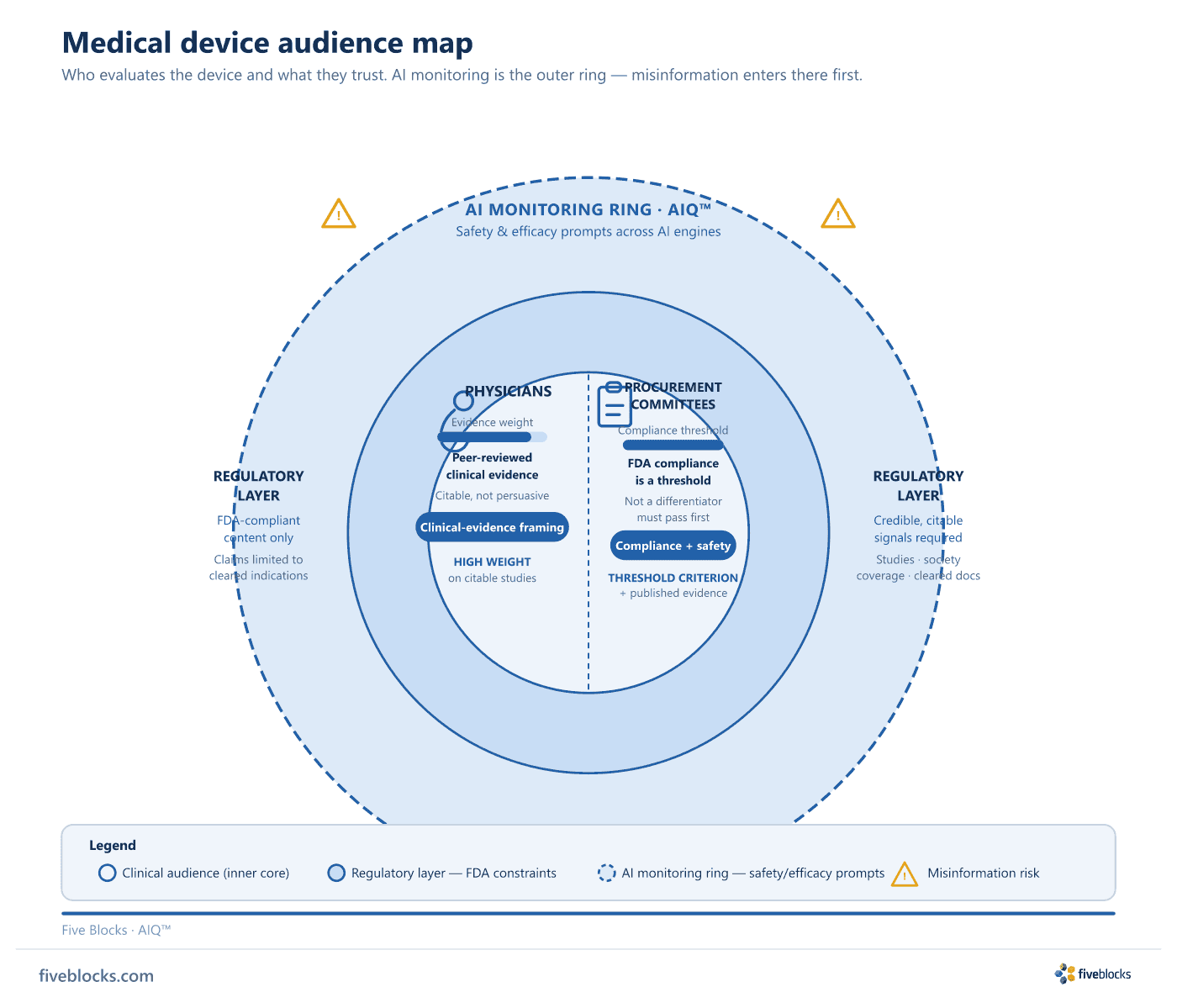
The clinical audience and what it weighs
- Physicians
- Weigh peer-reviewed clinical evidence and authoritative third-party coverage far more heavily than promotional material. Content has to be citable rather than persuasive.
- Procurement committees
- Evaluate compliance standing, safety record, and published evidence alongside price. FDA compliance status is a threshold criterion, not a differentiator.
The regulatory layer
- FDA-compliant content
- All public-facing content has to stay within FDA-permitted claims. That sharply limits how efficacy and safety can be described and forces clinical-evidence framing instead of marketing language. It also means the company often cannot answer a negative narrative as directly as it would like.
- Credible, citable signals
- Published clinical studies, authoritative society coverage, and cleared-indication documentation give both the AI engines and the clinical audience durable material to draw on. With either audience, they carry more weight than first-party marketing copy.
AI monitoring
Research shows AI engines produce highly variable and sometimes inaccurate clinical guidance when asked about medical topics. For device companies that variability is a business risk. A model can pull adverse-event chatter, litigation coverage, and off-label speculation into a confident safety or efficacy summary, and clinicians and procurement committees may act on it before the company knows the answer exists. We track safety and efficacy prompts across the AI engines with AIQ™, because a correction in this sector has to be fast and fully compliant at the same time.
Last reviewed: 20/05/2026
