What should a CCO know about digital reputation management?
Reputation now forms in AI engines, Wikipedia, and structured search as well as in earned media. Those channels work differently from PR, move on their own timeline, and need their own tooling, so the reputation budget has to carry a continuous line for monitoring and managing them alongside the media-relations retainer.
Reputation no longer lives where it used to. Earned media still matters, but a growing share of stakeholder impressions now form in channels a comms team does not control and PR was not built for: what AI engines say when asked about the company, the state of the Wikipedia article, the Knowledge Panel, and the structured search result.
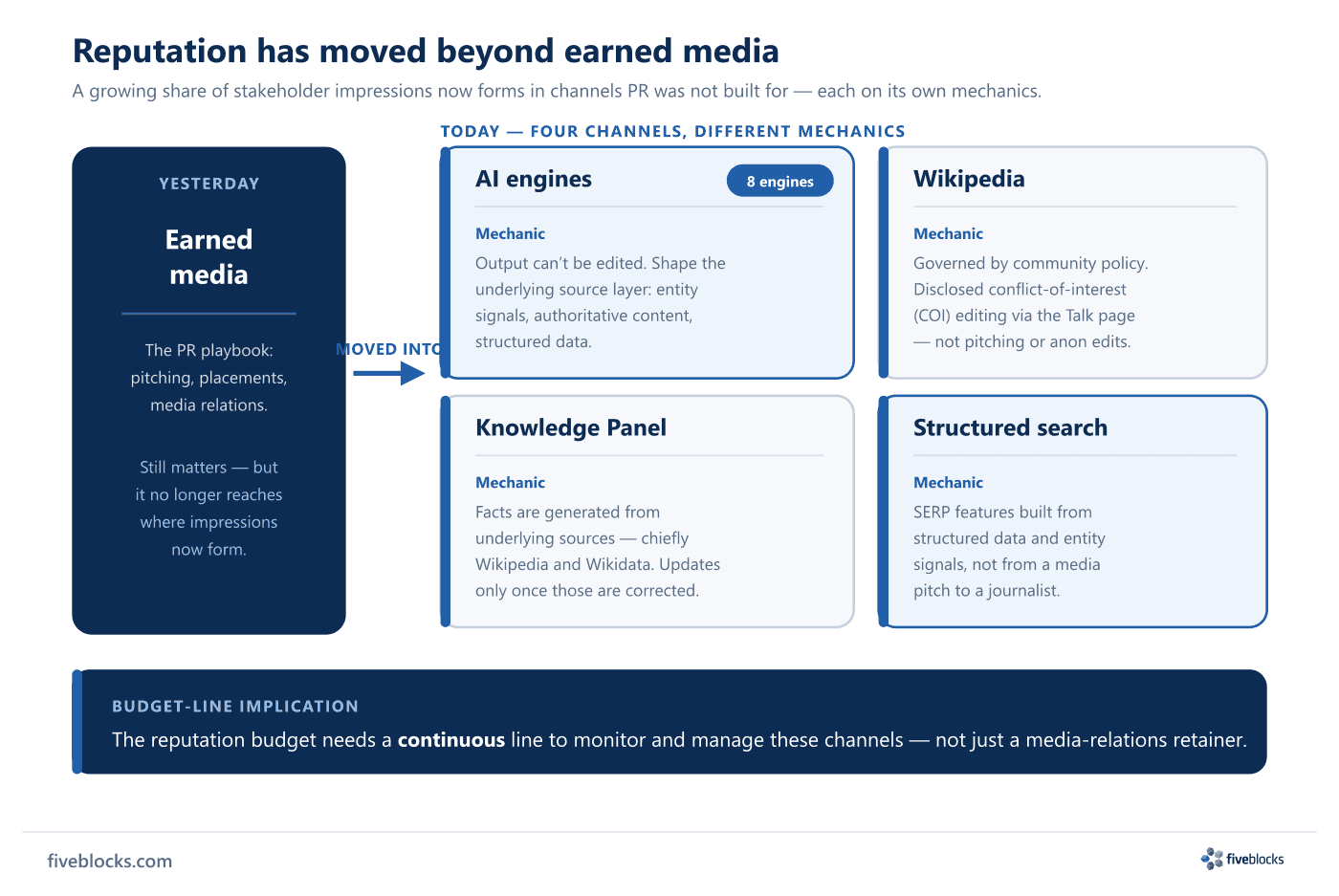
These channels work differently
Each of these surfaces behaves differently from earned media and from the others, which is why one media-relations playbook does not reach them:
- AI engines. You can’t fix what an engine says by prompting it or telling it it’s wrong. It doesn’t remember, and it builds every answer fresh from the sources it trusts. Durable change comes from improving those sources: a clear, consistent identity for the company, authoritative content, and clean machine-readable data.
- Wikipedia. Community policy governs the article. The compliant route is disclosed conflict-of-interest (COI) editing through Talk-page engagement, not pitching or anonymous edits.
- Knowledge Panel & structured search. The facts shown come from underlying sources, chiefly Wikipedia and Wikidata, so the panel updates only after those sources are corrected.
Each one takes its own tooling and expertise.
The budget-line implication
The consequence is structural. The reputation budget needs a line for monitoring and managing these channels continuously, alongside the media-relations retainer. The partner doing that work needs proprietary technology and a track record specific to it.
We monitor the AI engines with AIQ and the Wikipedia side with WikiAlerts™, which catches movement early.
Last reviewed: 20/05/2026
