What is the difference between reputation management and media relations?
Media relations earns coverage and manages journalist relationships. Reputation management is broader: it governs every place a stakeholder forms an impression - search results, Wikipedia, AI summaries, the Knowledge Panel - and media relations touches only some of those. Strong programs run both.
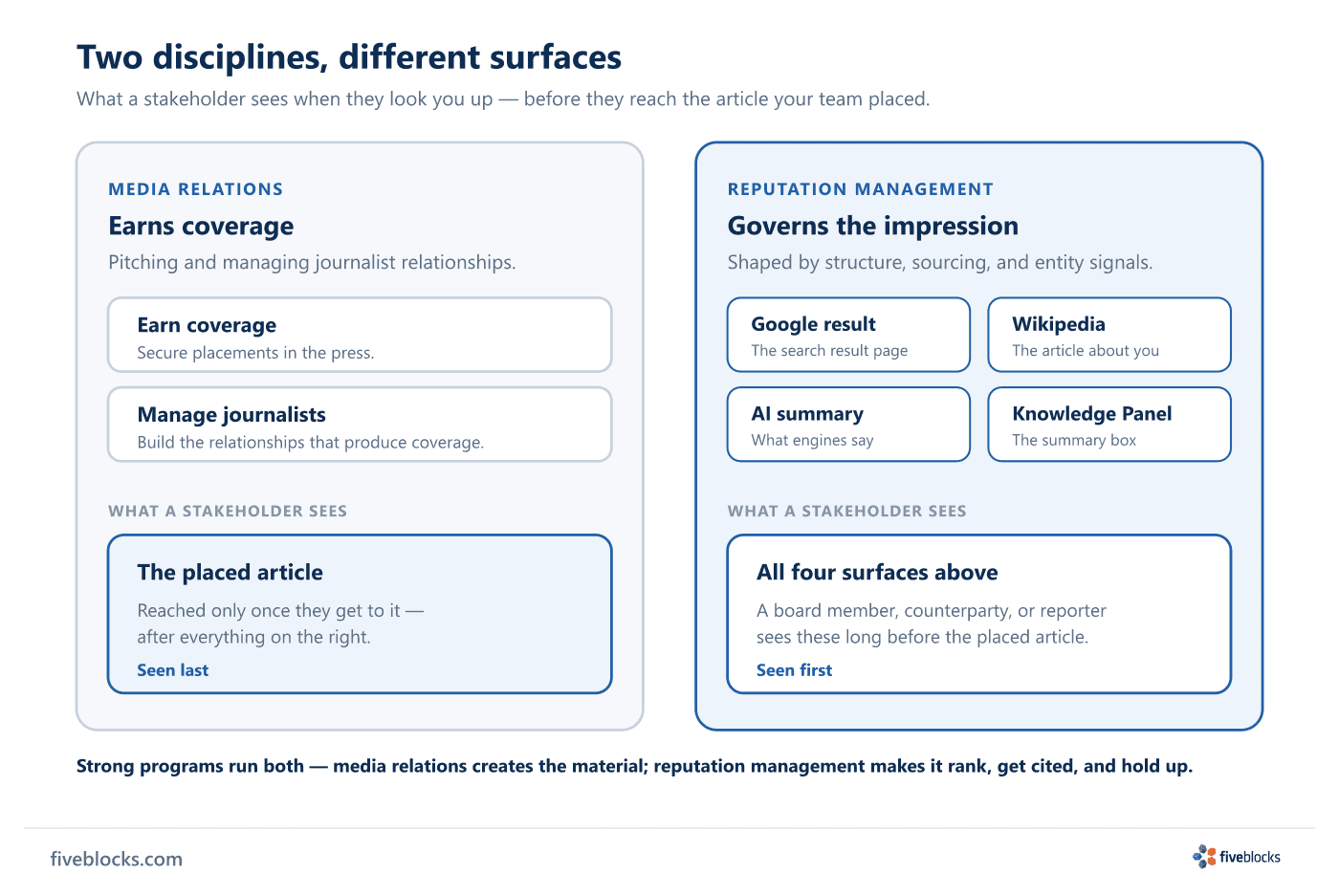
Media relations earns coverage and manages the relationships that produce it. Reputation management is broader: it governs every place a stakeholder forms an impression, and media relations touches only some of them. When a board member, a counterparty, or a reporter looks you up, they see a Google result page, a Wikipedia article, an AI-generated summary, and a Knowledge Panel long before they read the article your team placed.
Two disciplines, different surfaces
| Media relations | Reputation management | |
|---|---|---|
| What it governs | Earned coverage and the journalist relationships that produce it | Every place a stakeholder forms an impression – Google results, Wikipedia, AI-generated summaries, the Knowledge Panel |
| How the work is done | Pitching and managing relationships | Structure, sourcing, and entity signals – not pitching |
| What a stakeholder sees | The placed article, once they reach it | The result page, Wikipedia article, AI summary, and Knowledge Panel they see first – before any placed article |
Running both
Earning a placement and getting an AI engine to cite it accurately are separate disciplines, and the tools and methods behind them differ. Strong programs run both: media relations to create authoritative material, reputation management to make sure that material ranks, gets cited, and holds up across the channels people actually check.
Last reviewed: 20/05/2026
