How does Five Blocks work with nonprofit organizations?
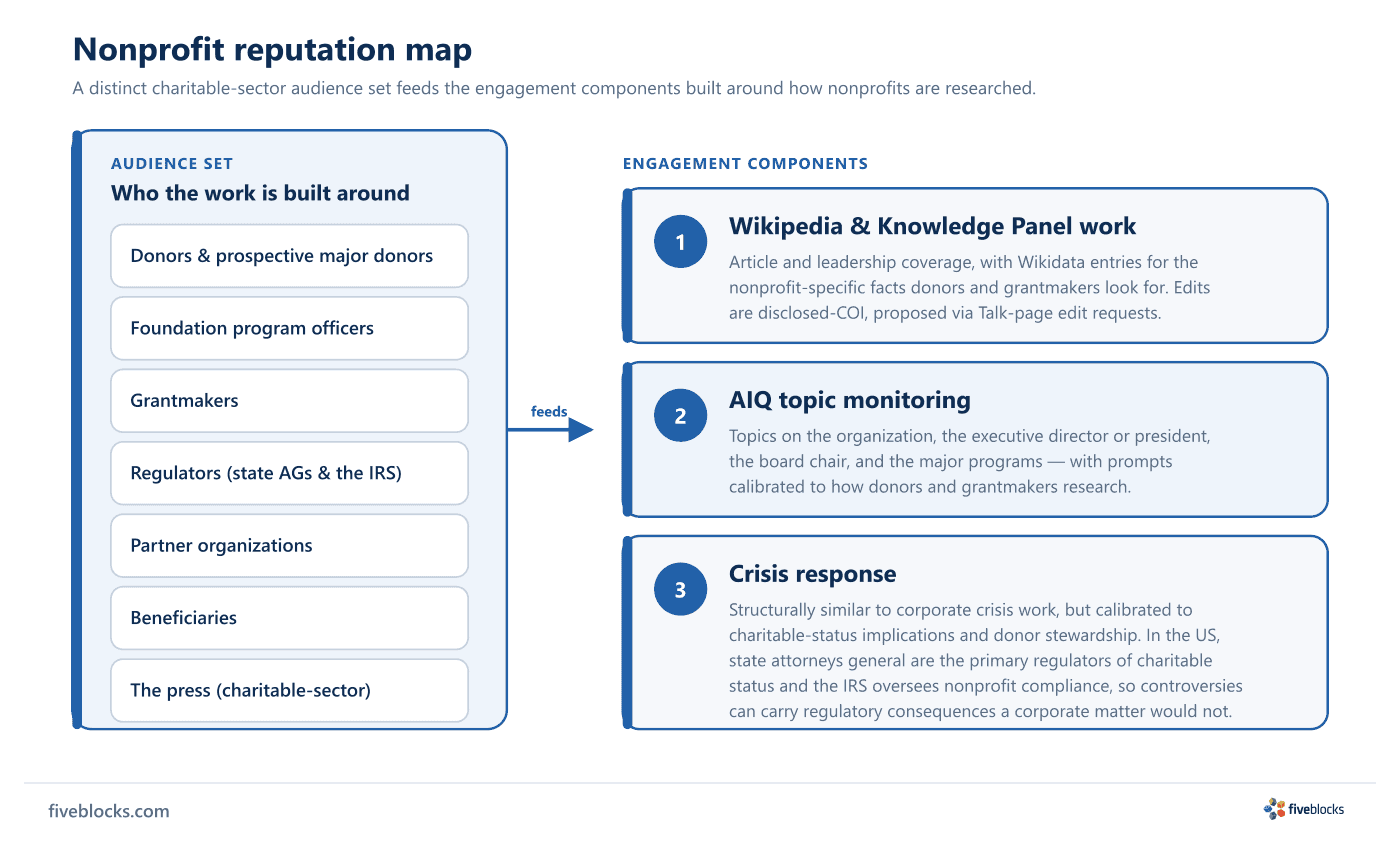
Five Blocks runs nonprofit engagements around a charitable-sector audience - donors, foundation program officers, grantmakers, regulators, partner organizations, beneficiaries, and the press: Wikipedia and Knowledge Panel work, AIQ monitoring of the organization, its leadership, and major programs, and crisis response tuned to charitable-status implications. In the United States, state attorneys general are the primary regulators of charitable status and the IRS oversees nonprofit compliance, which shapes how that crisis work is run.
Nonprofit reputation work is a separate workstream from corporate engagements, for two reasons: the audience is different, and charitable status carries its own regulatory exposure. Each component is built around how donors, grantmakers, regulators, and the press research a nonprofit.
Who the work is built around
Nonprofits are judged by a different audience than companies, and each component below is tuned to that audience:
- Donors and prospective major donors
- Foundation program officers and grantmakers
- Regulators – in the United States, state attorneys general for charitable status and the IRS for compliance
- Partner organizations
- Beneficiaries
- The press that covers the nonprofit and charitable sector
What the engagement covers
- Wikipedia and Knowledge Panel work
- Work across the organization’s article and its leadership, with Wikidata entries kept accurate for the nonprofit-specific facts donors and grantmakers look for. Wikipedia edits for a paying client follow disclosed conflict-of-interest rules: changes are proposed through Talk-page edit requests, not edited directly.
- AIQ topic monitoring
- AIQ topics cover the organization name, the executive director or president, the board chair, and the major programs. Prompts are written around how donors and grantmakers research before they give or partner.
- Crisis response
- Structurally similar to corporate crisis work, but with added attention to charitable-status implications and donor stewardship. State attorneys general are the primary protectors and regulators of nonprofits in their states – responsible for ensuring charitable corporations comply with legal requirements, that assets are properly managed and spent, and that directors and officers meet their fiduciary duties – so a controversy can carry regulatory consequences that a comparable corporate situation would not.
The economics differ too: most nonprofit engagements run at a lighter retainer than comparable corporate work, because sector budgets are smaller.
Last reviewed: 19/05/2026
