How does AI change the way PR professionals need to think about content?
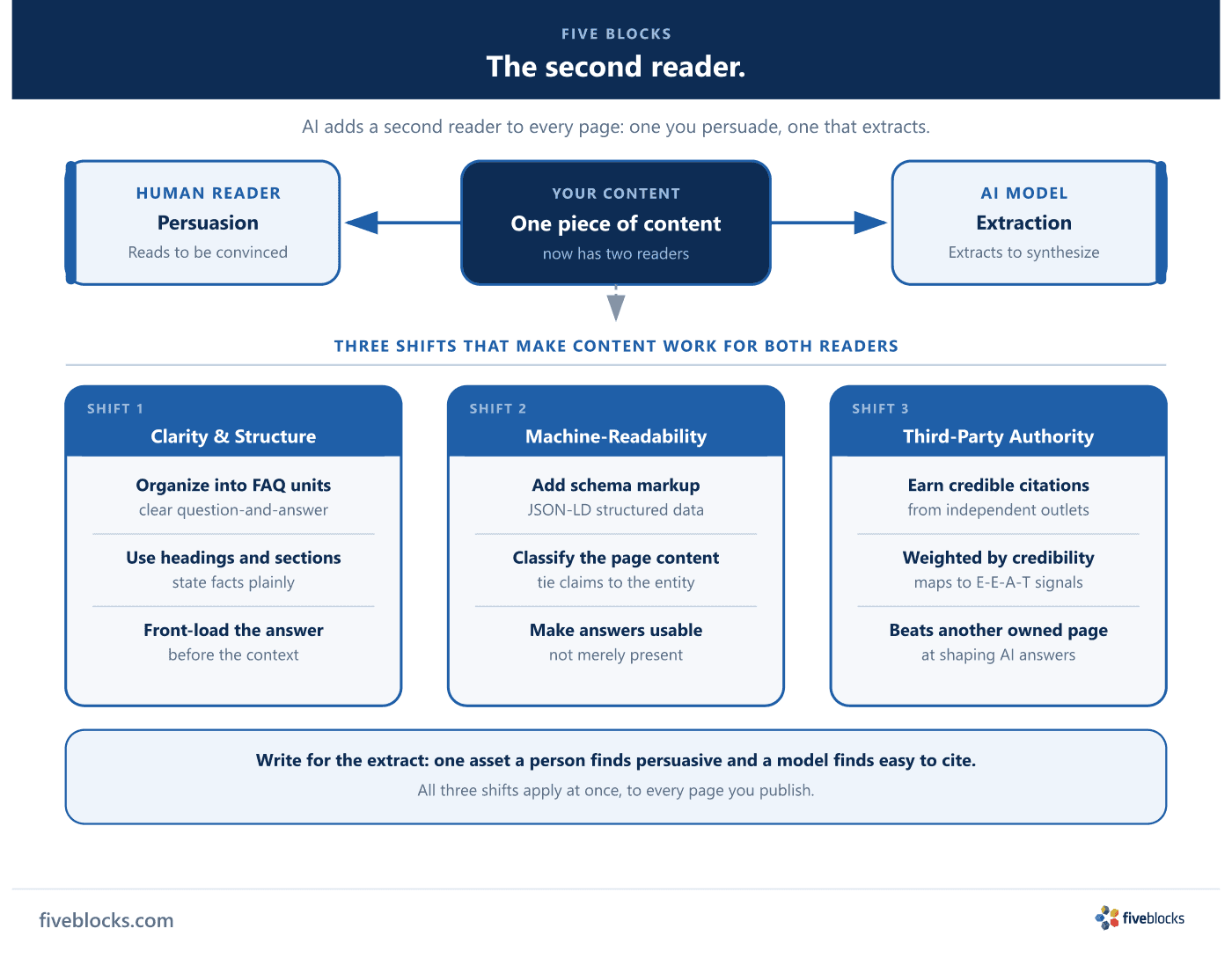
AI adds a second reader to every page. Alongside the human you want to persuade, an engine now extracts and synthesizes what you publish, so content has to be clearly structured, machine-readable, and cited by credible third parties for AI answers to pull it reliably.
AI changes the content brief because part of the audience now extracts and synthesizes rather than reading start to finish. The same page has to work for a person who finds it persuasive and a model that finds it easy to cite correctly, which we call writing for the extract. Three shifts matter for a comms team.
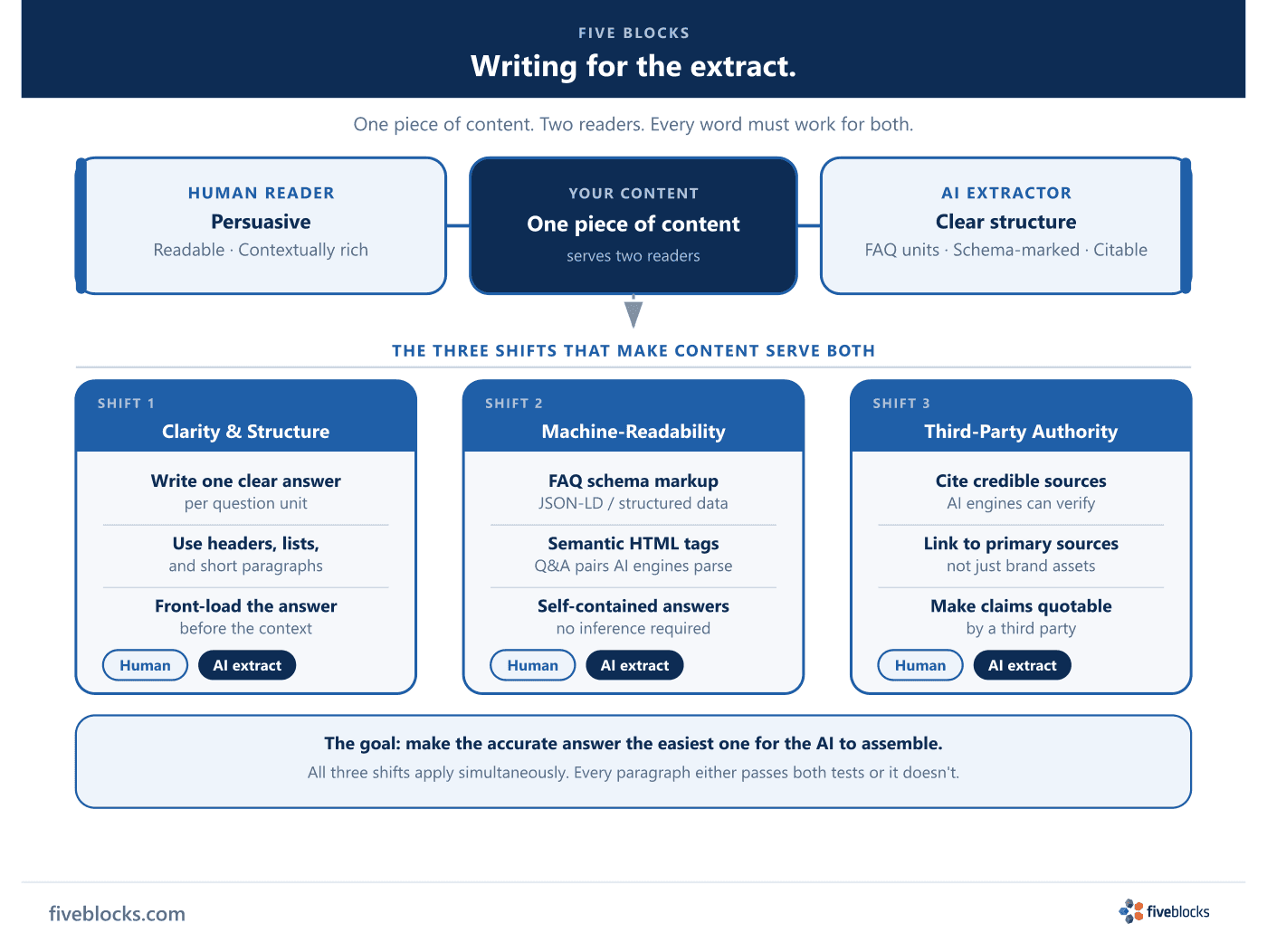
The three shifts
- Clarity and structure become load-bearing. AI engines pull more reliably from content that states facts plainly and is organized into clean, answerable units. Google’s own guidance favors pages “organized by paragraphs and sections, along with headings that provide a clear structure,” which is why FAQ-style framing works well.
- Machine-readability matters. Schema markup and structured data help search and AI engines understand what a page asserts and attach it to the correct entity, so authoritative content is usable rather than merely present. Google describes structured data as “a standardized format for providing information about a page and classifying the page content.”
- Third-party authority carries more weight than owned content. Engines weight sources by credibility, so a citation from a credible, independent outlet shapes an AI answer more than another page on your own site. This maps to Google’s E-E-A-T signals (experience, expertise, authoritativeness, and trustworthiness) and to its emphasis on “clear sourcing” and “evidence of the expertise involved.”
Two audiences, one page
None of this replaces writing for people; it adds a second reader with different habits. The goal is one asset that a person finds persuasive and a model can lift and cite accurately.
A note on FAQ markup: the “FAQ-friendly” point here is about structure and clarity, not the FAQ rich-result snippet. Google retired FAQ rich results as of May 7, 2026, so FAQPage markup no longer produces an FAQ accordion in the search results. Clean, answerable question-and-answer units still help engines extract content.
Last reviewed: 20/05/2026
Sources (4)
- Google's Guide to Optimizing for Generative AI Features on Google Search developers.google.com
- Intro to How Structured Data Markup Works developers.google.com
- Creating helpful, reliable, people-first content developers.google.com
- Generative Engine Optimization (GEO) and How to Optimize for AI Search Results (Princeton Study) seo.ai
