What is a SERP analysis and how is it used in reputation management?
Quick answer
A SERP analysis catalogs every ranking URL for a query, classifies each by source type and sentiment, identifies what is driving the current results, and produces a prioritized list of interventions across content, entity, and authority work.
A SERP analysis turns a search result page into an action plan. For each priority query, it works through four steps, from raw capture to a ranked list of where to act.
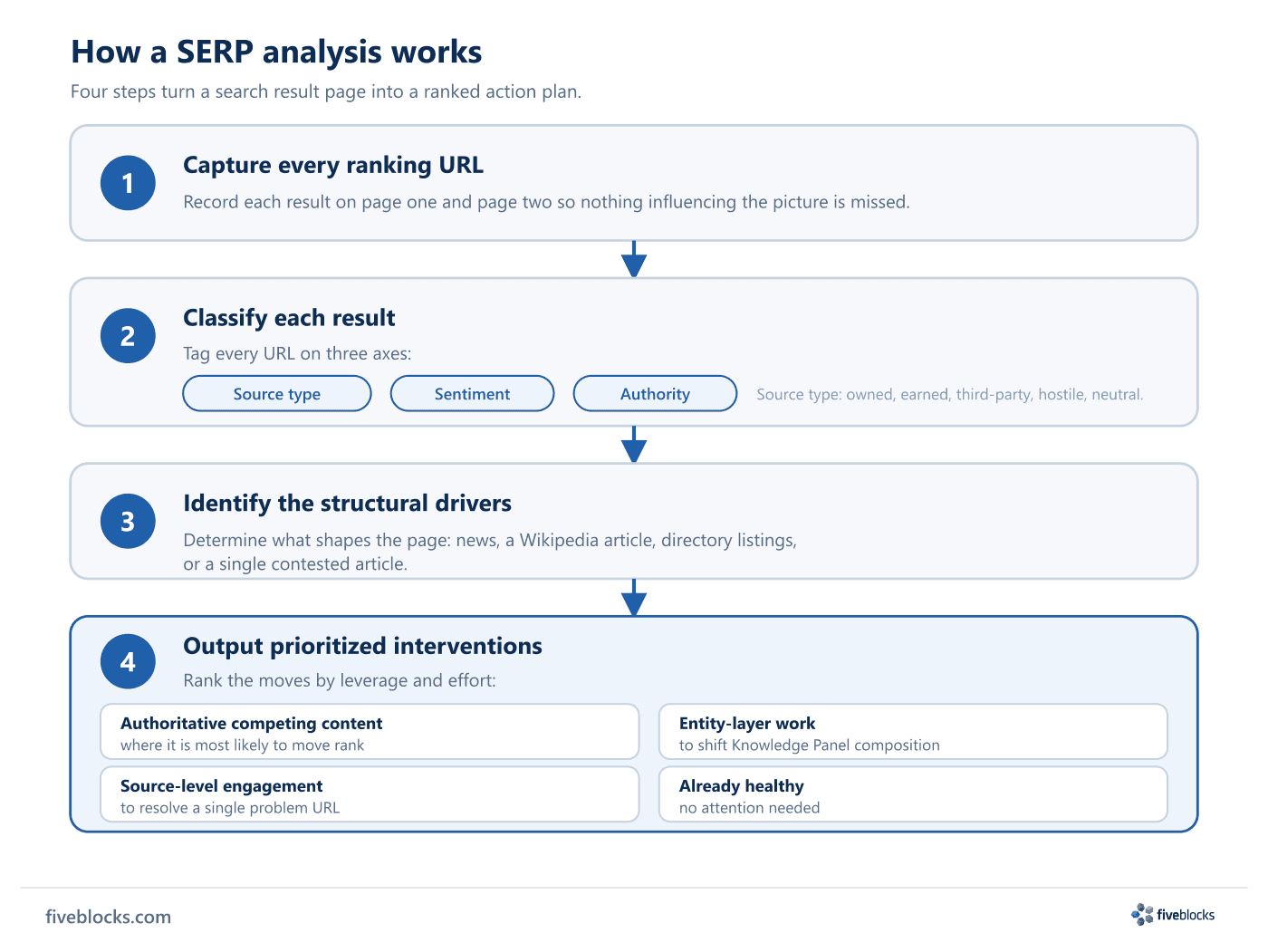
How a SERP analysis works
- Capture every ranking URL, record each result on page one and page two for the query so nothing that influences the picture is missed.
- Classify each result, tag every URL by source type (owned, earned, third-party, hostile, neutral), by sentiment, and by authority profile.
- Identify the structural drivers, work out what is shaping the result page: is it dominated by news, by a Wikipedia article, by directory listings, or by a single contested article?
- Output prioritized interventions, rank the moves by leverage and effort: where authoritative competing content is most likely to move rank, where entity-layer work would shift Knowledge Panel composition, where source-level engagement could resolve a single problem URL, and where the picture is already healthy and needs no attention.
Where it fits
SERP analysis sits between the diagnostic and the execution plan. During active engagements it is refreshed quarterly.
Last reviewed: 19/05/2026
