Why does executive reputation matter for company valuation?
Executive reputation affects company valuation through four channels: investor confidence, talent attraction, regulatory perception, and customer trust. Stakeholders research the CEO's digital and AI-generated presence as part of evaluating the company, so an accurate footprint reduces the discount markets apply to leadership uncertainty.
Executive reputation affects company valuation because stakeholders no longer separate the company from the executive when they do their research. The CEO’s digital presence, including how AI engines summarize them, is part of how investors, recruits, regulators, and customers evaluate the company itself. That influence reaches valuation through four channels.
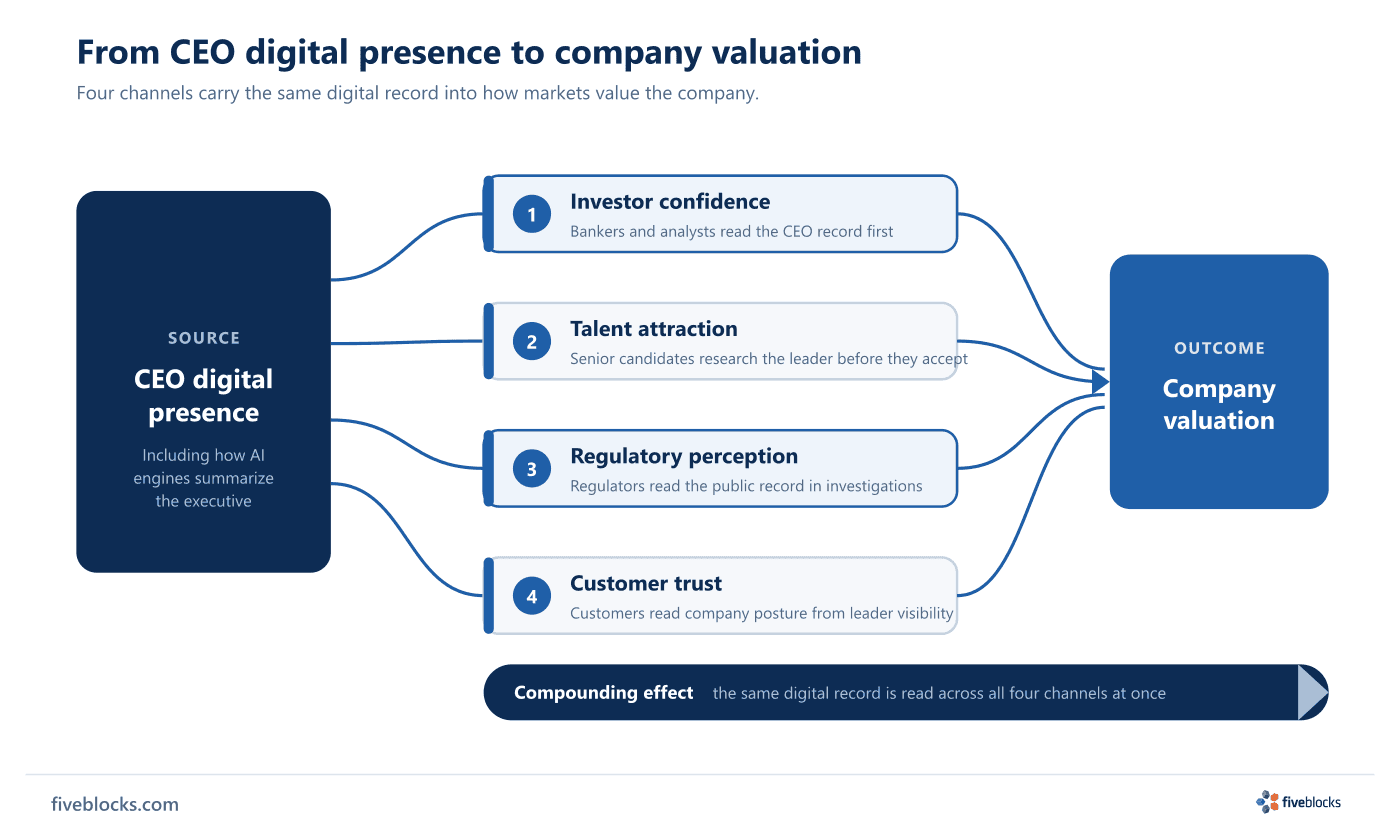
The four valuation channels
- Investor confidence: Bankers run the CEO’s name alongside the company name before any pitch, and sell-side analysts read AI-generated CEO summaries before earnings calls. Activist investors target executives with weak or contested digital footprints, because that asymmetry is exploitable.
- Talent attraction: Senior candidates research the leader they would report to before they accept an interview. A thin or problematic footprint costs the company at the top of its recruiting funnel.
- Regulatory perception: Regulators read the public-facing executive record during investigations, and that record shapes how scrutiny is framed.
- Customer trust: Customers and counterparties form impressions of company posture from the leader’s visibility and tone.
Why the effect compounds
The same digital record is read across all four channels at once. A CEO whose digital presence is accurate and authoritative reduces the discount markets apply to leadership uncertainty. A CEO with a problematic or invisible footprint creates an executable concern that shows up in deal terms.
Last reviewed: 19/05/2026
