How do board candidates get evaluated on their digital presence?
Routinely, and increasingly thoroughly. Nominating committees review search results, LinkedIn, Wikipedia, AI engine responses, and third-party data profiles during board diligence, and any gaps or inaccuracies surface in committee discussion and can affect the appointment.
Board nomination diligence has gone well beyond a quick LinkedIn-and-Google look over the last three years. Most major nominating committees now put candidates through a structured digital review, and what it turns up feeds into the interview and the appointment decision.
What the digital review covers
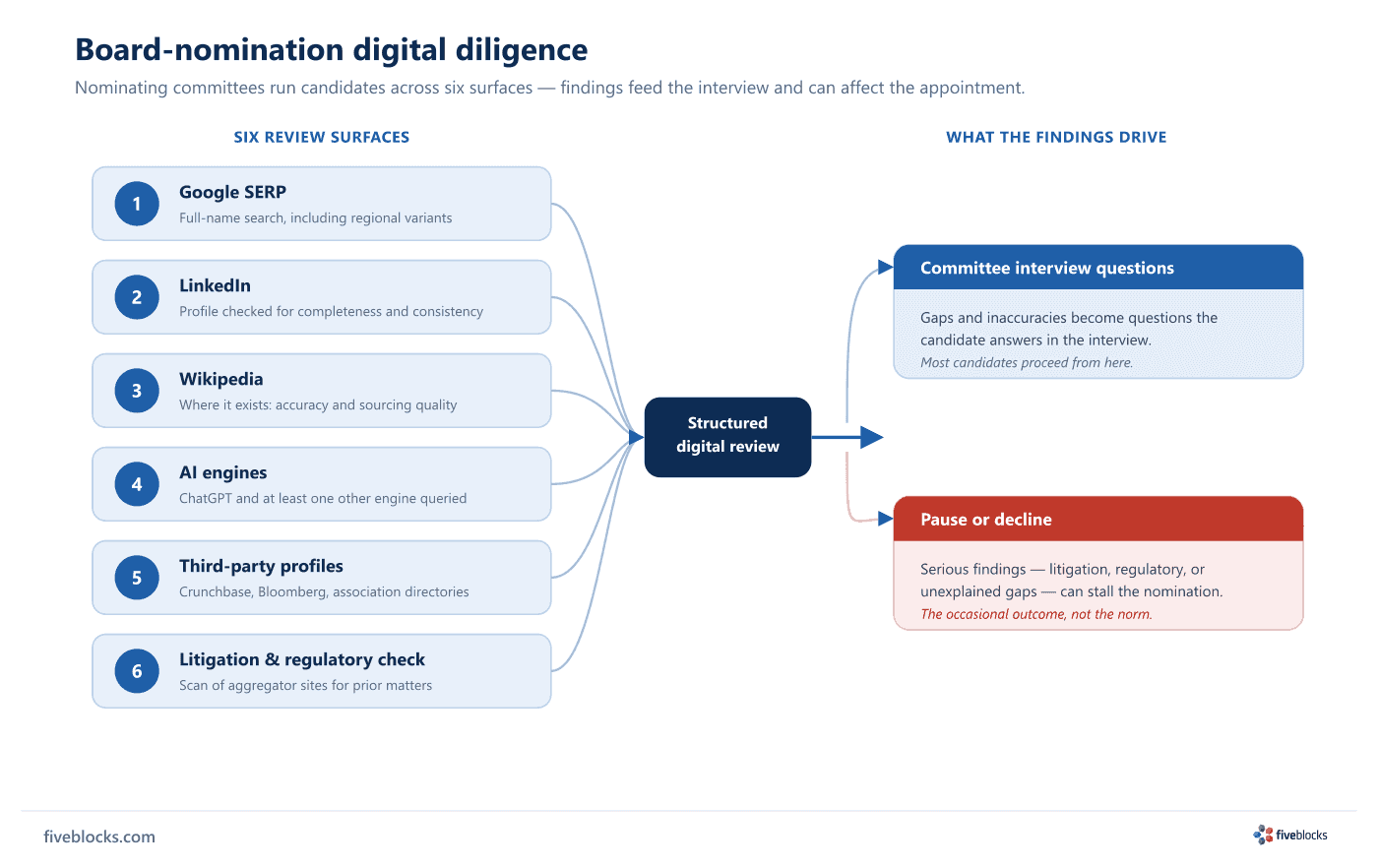
A typical review works through each surface in turn:
- Google SERP, the candidate’s full name search, including regional variants.
- LinkedIn, profile reviewed for completeness and consistency.
- Wikipedia, where an article exists, checked for accuracy and sourcing quality.
- AI engines, queries across ChatGPT and at least one other engine to see how each describes the candidate.
- Third-party profiles: Crunchbase, Bloomberg, and association directories.
- Litigation and regulatory check, a scan for prior litigation or regulatory matters appearing on aggregator sites.
How findings affect the appointment
The review produces questions for the candidate interview, and occasionally a reason to pause or decline. Candidates with a clean, complete, consistent digital presence move through faster; candidates with gaps spend interview time explaining them.
How to prepare
Preparing for board candidacy is straightforward, and it is best done six to twelve months ahead of a nomination.
Last reviewed: 19/05/2026
