What does a crisis engagement look like?
A crisis engagement runs about 90 days at intense cadence, then moves into a sustained 6-12 month rebuild. Week one is diagnostic and stabilization, weeks 2-12 are active intervention, and months 4-12 are durability work and monitoring.
A crisis engagement has two parts: a 90-day intensive, then a 6-12 month durability program. The early weeks stabilize the situation and the later months keep it from resurfacing. Work opens with the discovery call and a same-week diagnostic, holds an intense cadence through the first quarter, then shifts to ongoing maintenance.
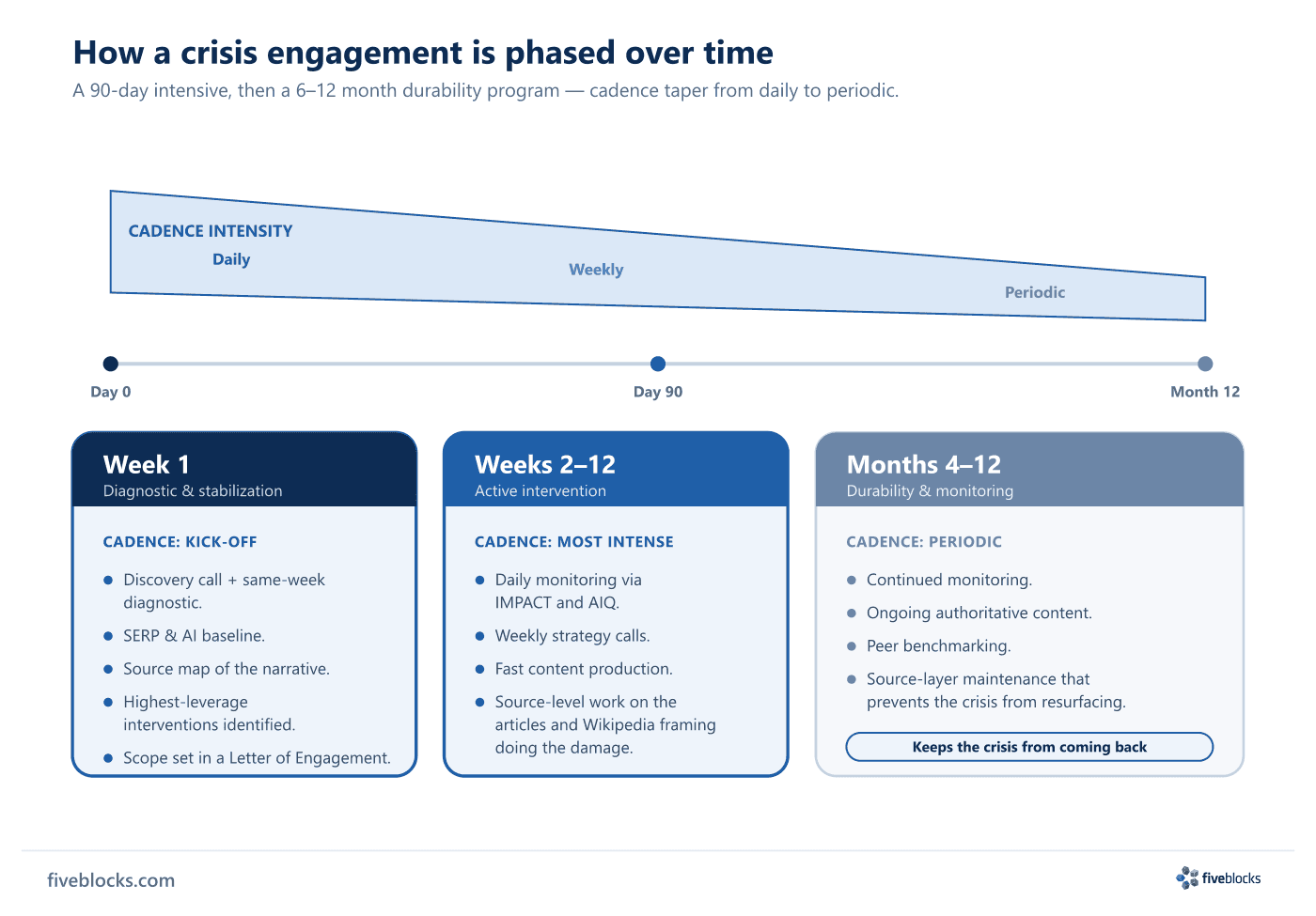
1. Week 1, diagnostic and stabilization
The diagnostic produces four things:
- A SERP and AI baseline of where the narrative stands today.
- A source map of what is actually driving the narrative.
- Identification of the highest-leverage interventions.
- A written program scope, documented in a Letter of Engagement.
2. Weeks 2-12, active intervention
The first 90 days run at the engagement’s most intense cadence:
- Daily monitoring through IMPACT and AIQ.
- Weekly strategy calls.
- Fast content production.
- Source-level work on the articles and Wikipedia framing doing the damage.
3. Months 4-12, durability and monitoring
After 90 days, if the trajectory has shifted, the engagement moves to a sustained 6-12 month durability program:
- Continued monitoring.
- Ongoing authoritative content.
- Peer benchmarking.
- Source-layer maintenance that prevents the crisis from resurfacing.
The full engagement is documented in a Letter of Engagement at the start. Scope changes mid-stream go into addenda.
Last reviewed: 19/05/2026
