How do you prepare Wikipedia for a potential crisis situation?
The best Wikipedia preparation for a crisis is a current, accurately sourced, and neutrally framed article completed well before the crisis arrives. An unmanaged article is routinely reshaped by journalists and interested parties during the crisis and the resulting framing feeds AI engines for years. The compliant path for any interested party is the disclosed conflict-of-interest process: propose changes on the Talk page using the COI template rather than editing the article directly.
Wikipedia carries a lot of weight in a reputation crisis. AI engines weight it heavily as a training and retrieval source, journalists check it routinely while writing follow-up stories, and it is often the first reference stakeholders consult when forming a view. The article will be edited during the crisis by news editors, journalists, and interested parties contributing through the Talk page. An article that is current, well-sourced, and neutrally framed before the crisis takes that editing pressure without losing the underlying picture. An article that is thin, out of date, or weakly structured gets reshaped in ways that can persist in AI engine narratives for years afterward.
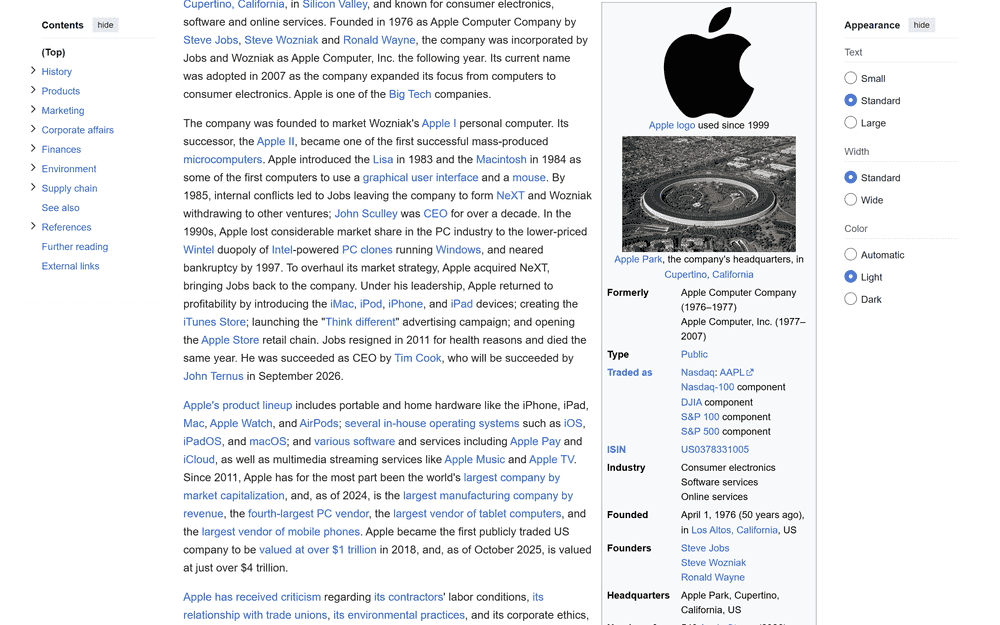
How to prepare a Wikipedia article before a crisis
- Establish an accurate, complete factual record. Every significant operating development, milestone, and corporate fact should be in the article and grounded in reliable secondary sources. Others fill the gaps during a crisis, and not always accurately.
- Source from reliable secondary coverage. Wikipedia requires reliable, independent secondary sources, media coverage, analyst reports, and published references, not press releases or company-controlled materials. The stronger the sourcing, the harder the article is to reshape under crisis editing.
- Ensure balanced, neutrally framed coverage. Difficult topics already covered in the public record should appear in encyclopedic proportion and tone. An article with unbalanced framing is more open to contested editing during a crisis than one that has already addressed the topic accurately.
- Keep the article current. Outdated articles draw corrective edits during a crisis, and the correctors may not be neutral. Routine maintenance keeps the article as the authoritative record rather than an opening for others to update it under pressure.
- Use the disclosed COI process for any interested-party contributions. Wikipedia policy strongly discourages direct editing by anyone with a financial or personal interest in a subject. The compliant path is to disclose the relationship and propose changes on the article’s Talk page using the
{{edit COI}}template, so the community can peer-review and implement the suggestion. Undisclosed paid editing violates Wikipedia’s terms of use and, if detected during a crisis, adds to the original problem rather than containing it.
The work before the crisis is standard Wikipedia discipline: an accurate record, reliable secondary sourcing, balanced coverage of difficult topics, current structure, and disclosed COI editing through Talk-page edit requests. Companies that maintain this routinely are in a much stronger position when crisis editing begins than those that start the work after the event.
Last reviewed: 19/05/2026
