How do you assess the severity of a reputation crisis?
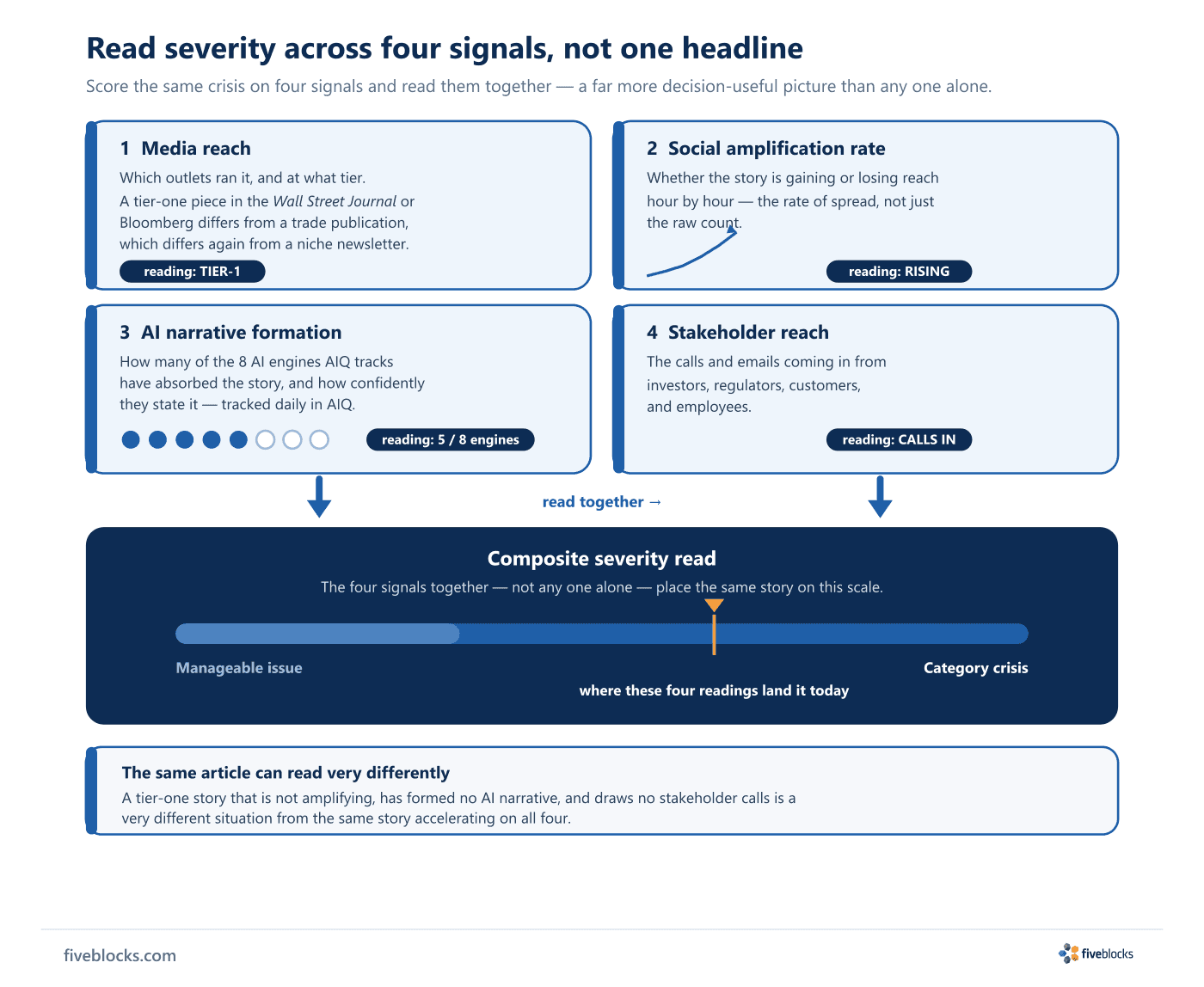
Assess severity across four signals: media reach (which outlets, what tier), social amplification rate (whether the story is gaining or losing reach), AI narrative formation (how many engines have absorbed it and how confidently), and stakeholder reach (whether investors, regulators, customers, or employees are calling). Read together, the four tell you far more than any one alone.
A good severity read is structured, not a gut call on a single headline. You score the same crisis across four signals and read them together. The same article can be a manageable issue or a category crisis depending on how the four are moving.
The four severity signals
- Media reach
- Who has run the story and what tier of outlet they are. A tier-one piece in the Wall Street Journal or Bloomberg is a different severity than a piece in a trade publication, which is different again from a niche newsletter.
- Social amplification rate
- Whether the story is gaining or losing reach hour by hour. The rate of spread, not just the raw count.
- AI narrative formation
- How many of the eight AI engines AIQ currently tracks have absorbed the story and how confidently they are stating it, tracked daily in AIQ.
- Stakeholder reach
- The calls and emails coming in from investors, regulators, customers, and employees.
Why all four, not one
The four signals together tell you much more than any one of them alone. That same WSJ article can be a manageable issue or a category crisis depending on how the signals are moving. A tier-one story that is not amplifying, has not formed an AI narrative, and is generating no stakeholder calls is a very different situation from the same story accelerating across all four.
Last reviewed: 19/05/2026
