How should companies manage their reputation in AI app stores and directories?
Treat AI app store and directory listings as a managed reputation channel, not a product chore. Apply the same discipline you use for a Knowledge Panel: accurate descriptions, complete structured attributes, quality screenshots, and authentic reviews.
AI app stores, plugin directories, and platform-specific listing channels, the GPT Store, the Anthropic and Google equivalents, and vertical AI marketplaces, have become a discovery channel that runs on familiar rules. The platforms pull from listing descriptions, structured attributes, screenshots, ratings, and reviews, so the reputation work is close to Knowledge Panel management.
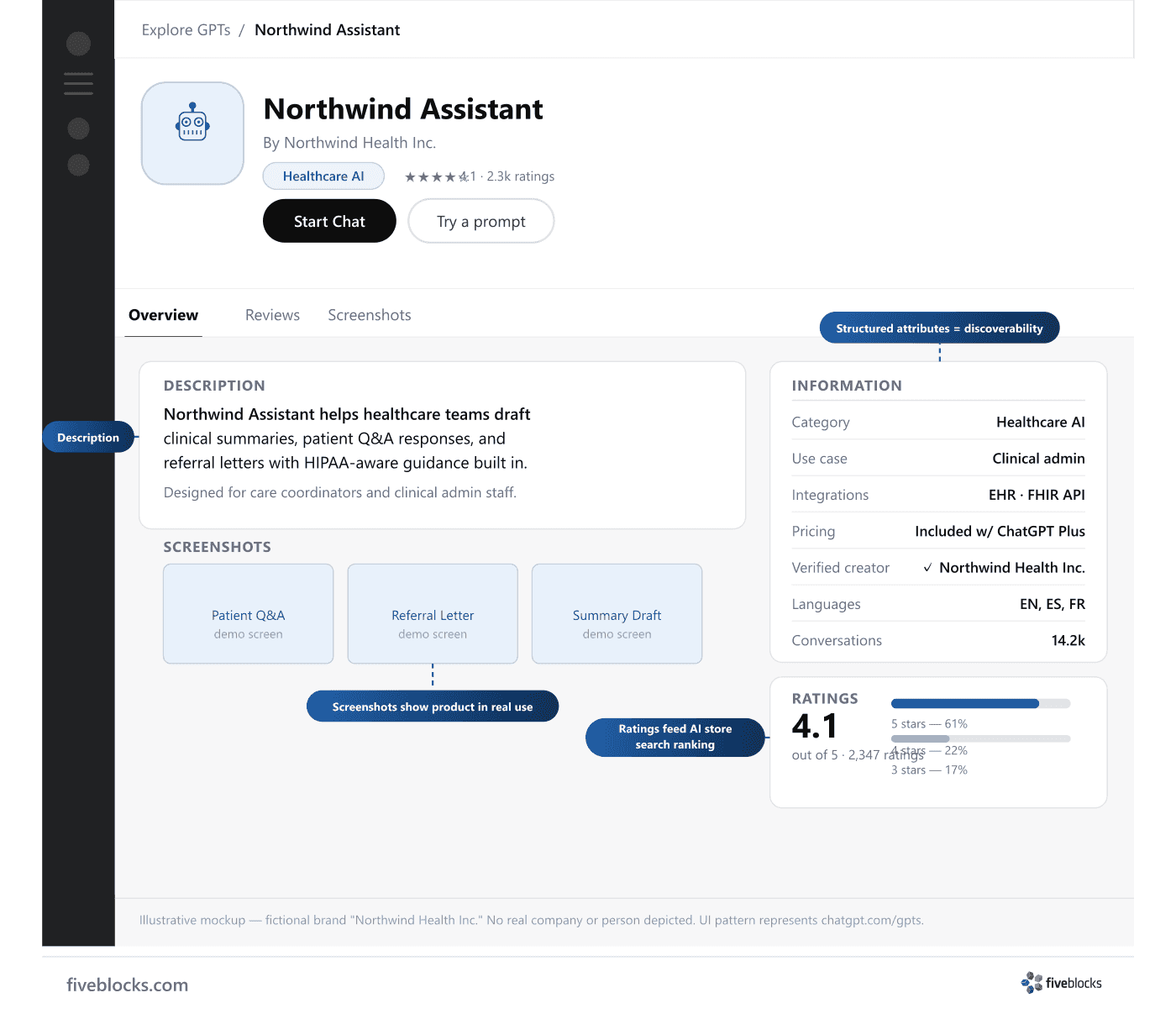
What the platforms pull from a listing
The inputs that shape how a listing is described and ranked are consistent across these channels:
- Listing description, accurate, well-structured copy that matches the brand’s actual positioning.
- Structured attributes, complete coverage of category, use case, integrations, and pricing.
- Screenshots and demo content, good visuals that show the product in real use.
- Ratings and reviews, authentic reviews that reflect actual usage rather than inflated volume.
Why it reads like Knowledge Panel work
The same disciplines that produce a clean Knowledge Panel produce a strong listing: accurate descriptions, complete attribute coverage, and structured, machine-readable signals. The listings then feed into AI engine responses for category and recommendation prompts, so a well-managed listing affects more than the store page itself.
Treat it as a reputation channel
Companies with significant AI app or plugin presence should monitor these listing channels as a reputation channel rather than leave them to product teams. The listings shape how the engines describe the product when a user asks for a recommendation in the category.
Last reviewed: 19/05/2026
