What does a quarterly reputation review look like?
A quarterly reputation review is a structured strategic-adjustment session covering four areas of the program across a three-month window: SERP composition and AI narrative trends, Wikipedia activity, peer benchmarks, and a full work-completed inventory with key wins, risks, and next-quarter recommendations. It sits between the monthly operational report and the annual planning cycle and is typically presented to the chief communications officer and senior stakeholders.
Quarterly reviews are for strategic adjustment, not operations. They aggregate three months of data to surface directional shifts that no single monthly report shows, and they set or revise priorities for the quarter ahead. The typical meeting involves the chief communications officer and any senior stakeholders the client wants included.
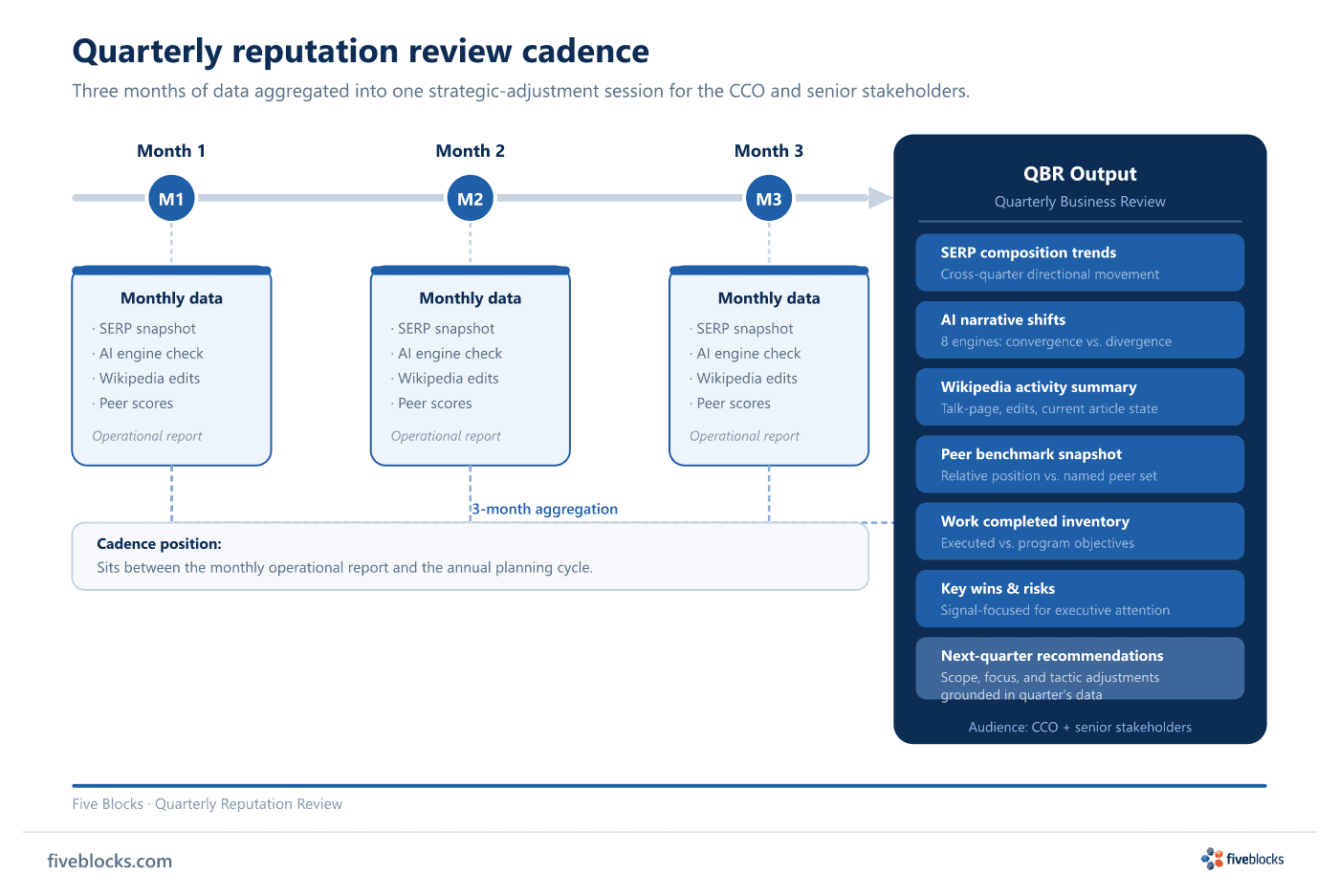
- SERP composition trends
- A cross-quarter view of where the picture has improved, deteriorated, or held steady. The point is to catch directional movement, not just the current snapshot, so that patterns invisible in a single month become clear over the three-month arc.
- AI narrative shifts
- How engine responses have moved across the quarter, with specific examples drawn from the eight engines AIQ currently tracks: ChatGPT, Copilot, Gemini, AI Overview, Perplexity, Grok, Claude, and Google AI Mode. This is where you see whether the brand narrative in AI is converging with the search narrative or pulling away from it.
- Wikipedia activity summary
- A short account of any major Talk-page work, edits accepted, edits reverted, and the current article state. Wikipedia ranks prominently in the SERP and feeds AI engines as a primary source, so its quarterly trajectory matters to reputation.
- Peer benchmark snapshot
- Where the client now stands relative to the named peer set on the metrics the program tracks. A quarterly benchmark reading shows whether the relative position is improving or eroding, independent of absolute score movement.
- Work completed
- A clear inventory of what was executed during the quarter against the agreed program objectives. This gives accountability and a factual basis for the wins-and-risks discussion that follows.
- Key wins and risks
- Wins worth executive attention and risks worth flagging before they compound. Keep this section brief and signal-focused rather than a recap of every activity.
- Next-quarter recommendations
- Proposed adjustments to scope, focus, or tactics based on what the quarter’s data has shown. These recommendations should follow from the trends and benchmarks reviewed earlier in the meeting.
Last reviewed: 19/05/2026