How do you manage reputation for a SaaS company during a security incident?
Transparent disclosure comes first, with timing coordinated with counsel. Run AIQ™ monitoring through the incident and the period after it to catch and correct misinformation in AI answers. Then publish the durable material: what was remediated and which security controls are now in place, so the public record documents how the company handled it.
A security incident is a trust event. How a SaaS company communicates during it usually determines the reputational outcome more than the breach itself does. The governing principle is transparent, factual disclosure coordinated with counsel and with any applicable regulatory notification requirements, because customers and the press punish perceived concealment far more harshly than the underlying incident.
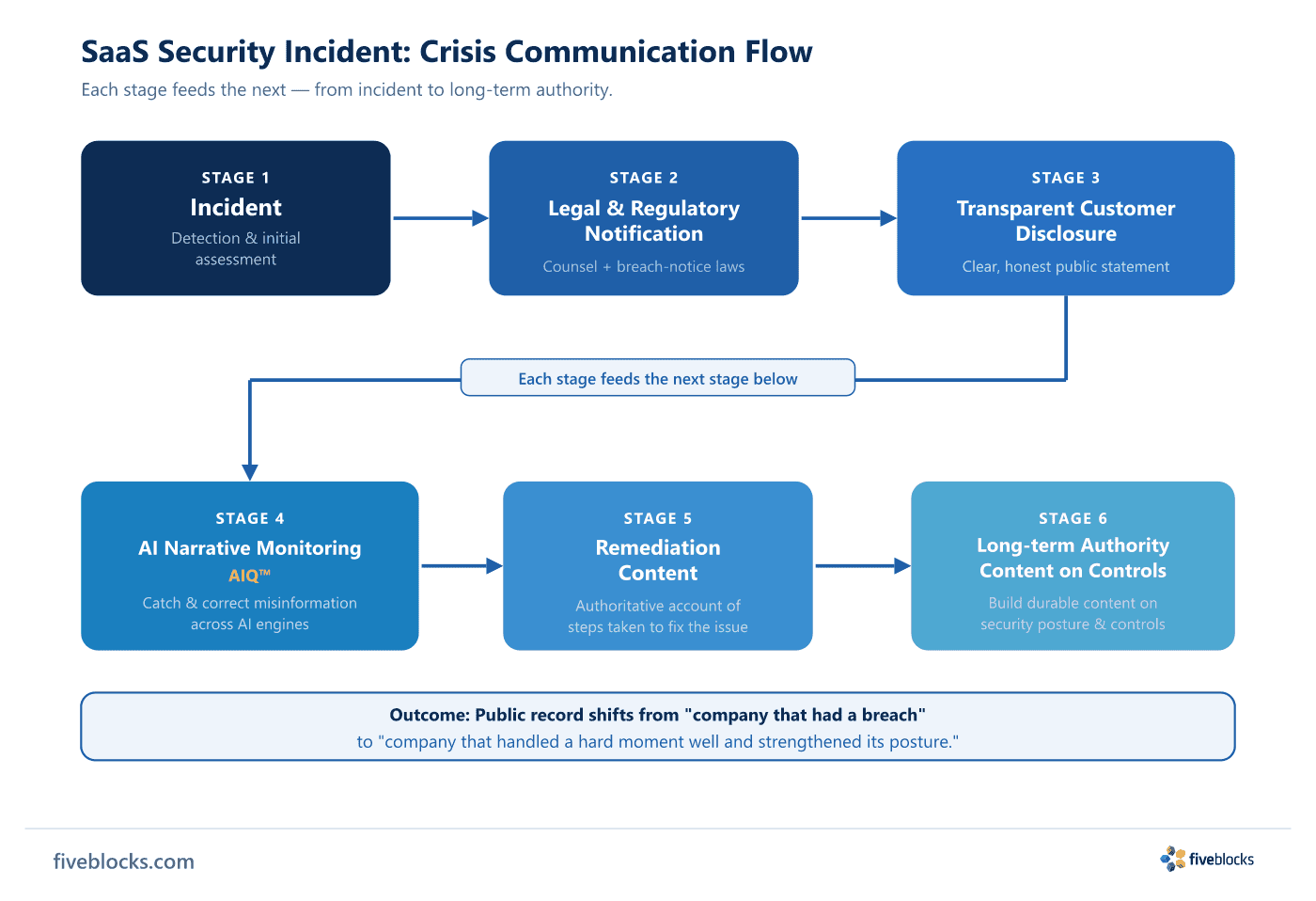
The five-stage response arc
- Legal and regulatory notification. Coordinate disclosure timing with counsel and comply with applicable breach-notification requirements before any public statement. Get the order of operations wrong and the reputational damage arrives with regulatory exposure attached.
- Transparent customer disclosure. Tell customers and stakeholders what happened, which systems were affected, and what is being done about it. Vague statements leave a vacuum, and the speculation that fills it is usually worse than the truth.
- AI narrative monitoring with AIQ™. Start AIQ™ immediately and keep it running through the post-incident period. AI engines pick up breach coverage quickly and can keep citing it in answers about the company’s security long after remediation. Monitoring catches misinformation while it can still be corrected.
- Remediation content. Publish a factual account of the specific steps taken to contain and fix the issue. Without it, engines and journalists have the incident to report and nothing about the response.
- Long-term authority content on controls. In the weeks and months after the acute phase, build durable content on the security controls now in place. Over time the public record moves from “company that had a breach” toward “company that handled a hard moment well and strengthened its posture.”
Why each stage feeds the next
Legal coordination creates room for honest customer disclosure without premature or legally compromising statements. Honest disclosure reduces the speculation that would otherwise drive negative AI narratives. AIQ™ monitoring shows which inaccurate claims are gaining traction, so remediation content can address them at source. Content about the controls then accumulates authority that outweighs the original breach coverage in search and AI synthesis.
What determines the outcome
Customers and AI engines judge a SaaS company on how it handled an incident far more than on the fact that one happened. A company with a clear response arc and documented post-incident controls is a harder target for lasting narrative damage than one that stayed silent or issued vague denials. The reputation work and the security work are the same work.
Last reviewed: 20/05/2026
