What is the difference between organic and paid results in reputation management?
Organic results are the unpaid, algorithmically ranked listings: AI Overviews, Knowledge Panels, news boxes, and the standard links. Paid results are advertising that appears only while a campaign is funded. Reputation management focuses on the organic layer because the goal is a footprint that persists rather than short-term ad placement.
The distinction matters because reputation and advertising work on different time horizons. Paid search results are ads. They sit at the top of the results page while a campaign is funded and stop showing once it ends, producing impressions and clicks within a set budget window. Organic results are the unpaid listings Google ranks algorithmically, including AI Overviews at the top, the Knowledge Panel, news boxes, and the standard links. They reflect authority and entity recognition rather than ad spend.
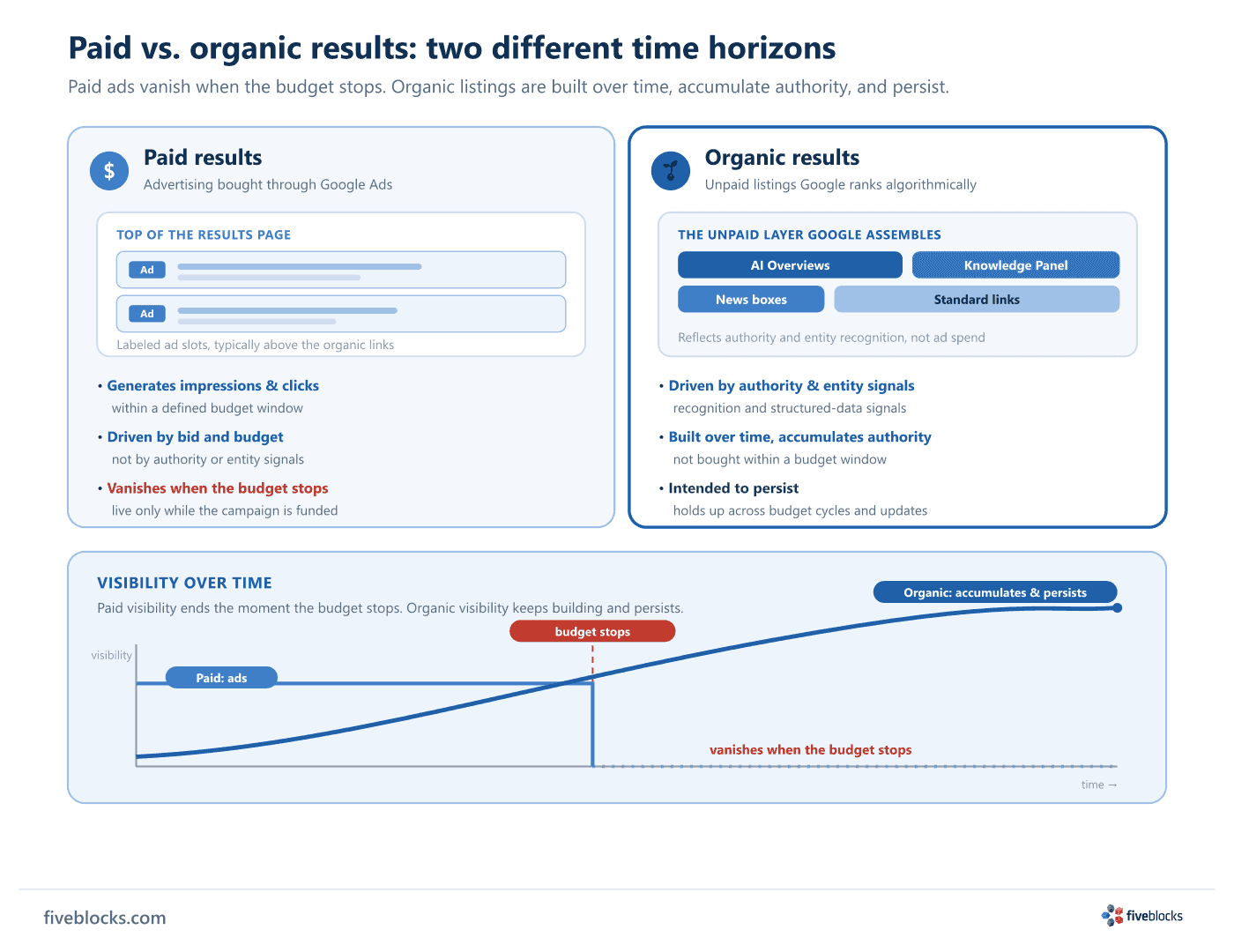
Paid vs. organic at a glance
| Dimension | Paid results | Organic results |
|---|---|---|
| What they are | Advertising bought through Google Ads | Unpaid listings Google ranks algorithmically |
| Where they appear | Labeled ad slots, typically at the top of the page | AI Overviews, Knowledge Panels, news boxes, People Also Ask, and the standard links |
| What drives them | Bid and budget | Authority, entity recognition, and structured-data signals |
| Time horizon | Live only while the campaign is funded | Built over time and intended to persist |
| Reputation role | Supports specific moments (launches, events, campaign windows) | The lasting footprint a reputation program is built on |
Why reputation work targets the organic layer
A reputation program is generally aimed at the organic results, because that is where stakeholders form lasting impressions and where the same entity signals (Wikipedia, Wikidata, schema, the Knowledge Graph) feed both Google’s features and the AI engines. The organic layer is where AI Overviews, Knowledge Panels, and news boxes are generated, so improving it also improves how a brand is described across search and AI.
- Durability. The organic footprint is intended to hold up across news cycles, algorithm updates, and new AI engine launches, rather than reset when a budget runs out.
- Shared infrastructure. Modern results pages combine AI Overviews, Knowledge Panels, People Also Ask, news carousels, and standard links, all part of the organic layer a reputation program works on.
- Paid as a supplement. Paid tactics can support a specific moment such as a product launch, an executive event, or a campaign window, but they are typically a complement to a reputation strategy rather than the strategy itself.
Last reviewed: 19/05/2026
