What is a content moat and how does it protect your reputation?
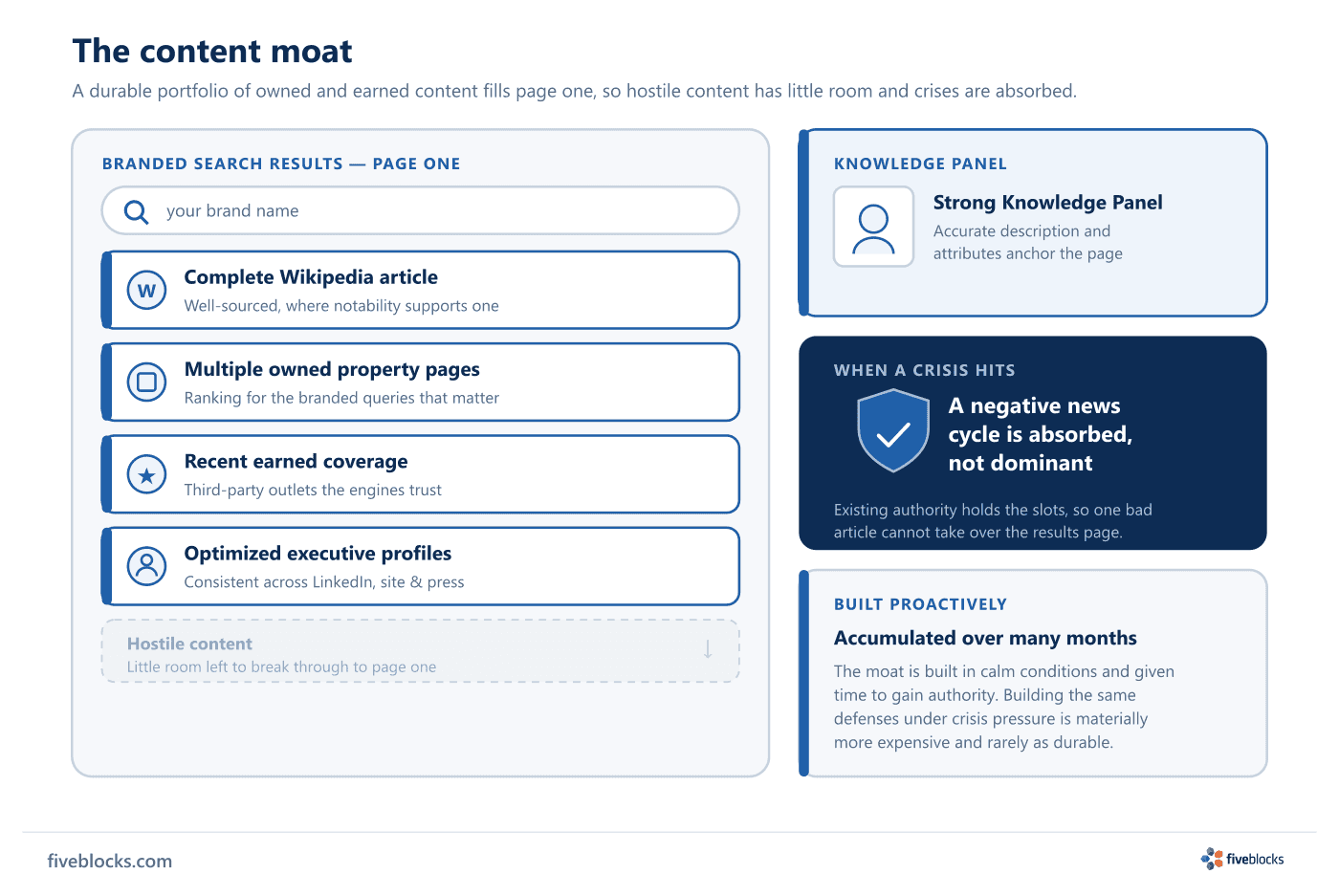
A content moat is a portfolio of authoritative owned and earned content - a complete Wikipedia article, a strong Knowledge Panel, multiple ranking owned pages, recent third-party coverage, and optimized executive profiles - that fills the high-value branded SERP slots so hostile content has little room to break through and a negative news cycle is absorbed rather than allowed to dominate the page.
A content moat is a portfolio of authoritative owned and earned content that holds the high-value slots on a branded search results page. Those slots are already taken, so low-quality or hostile content has little room to break through, and the brand has something to fall back on when a crisis hits. The moat is built ahead of time, not in response to a problem, and it earns its keep under pressure.
What the moat is made of
- A complete, well-sourced Wikipedia article where notability supports one.
- A strong Knowledge Panel with accurate description and attributes.
- Multiple owned property pages ranking for the branded queries that matter.
- Recent authoritative third-party coverage from outlets the engines trust.
- Well-optimized executive profiles that are consistent across LinkedIn, the corporate site, and conference and press appearances.
Why it protects reputation
A brand with a deep moat leaves hostile content almost nowhere to land on page one, because the authoritative slots are already held by content that is hard to displace. When a negative news cycle hits, that existing authority absorbs the impact instead of being pushed aside. A brand without the moat has the opposite problem: a single bad article can hold the results page for a long time, simply because nothing competing is strong enough to take the slot away from it.
Why it has to be built early
The moat comes from consistent investment over many months, and it works best when that work is done in calm conditions and given time to accumulate authority. Building the same infrastructure under crisis pressure costs far more and rarely holds up as well, because the work is now competing against a live news cycle instead of getting ahead of one. The strongest defensive positions are the ones put in place before they are needed.
Last reviewed: 19/05/2026
