A WSJ article about my company dropped this morning – what can I realistically fix by end of week?
By end of week you can have AI narrative monitoring live, a coordinated PR/legal statement drafted, source-level correction requests filed with the outlet, and authoritative counter-content moving into syndication. Full SERP rebalancing takes longer, but the structural response is in place within the first 72 hours.
A major-outlet article follows a defined sequence in its first 72 hours. Acting on that sequence immediately limits how deeply the narrative embeds in search and AI engines. Here is what you can realistically get done by end of week, and who owns each step.
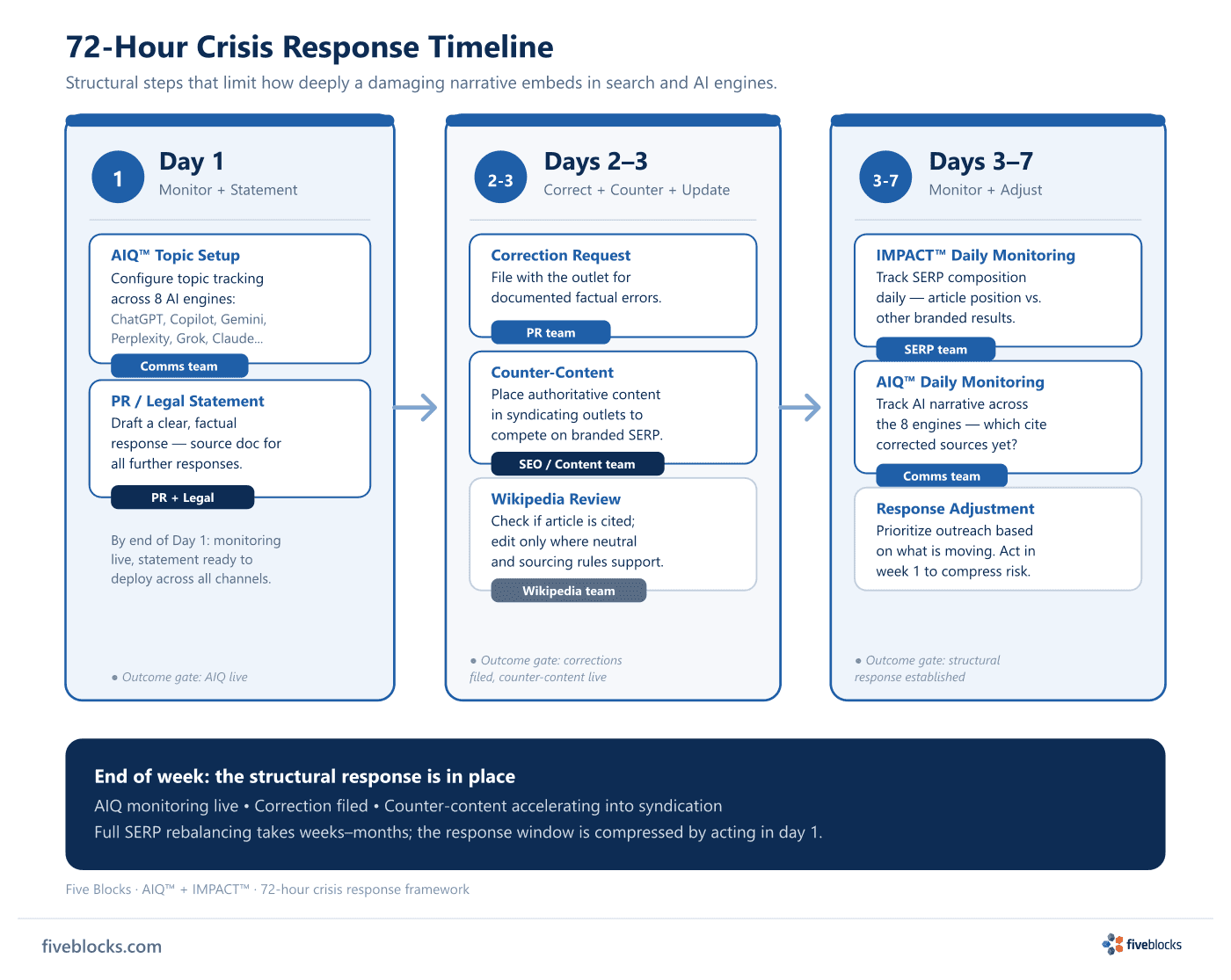
Day 1, Stand up monitoring and draft your statement
- AIQ™ topics (comms team): Configure AIQ topic tracking specific to the article’s narrative so that by Day 2 you can see which of the eight AI engines AIQ currently tracks: ChatGPT, Copilot, Gemini, AI Overview, Perplexity, Grok, Claude, and Google AI Mode, have absorbed the story, which sources are driving it, and which engines are diverging.
- Factual statement (PR + legal): Draft a clear, factual response coordinated between your communications team and counsel. This is not for immediate publication; it is the source document all other responses draw from.
Days 2, 3: Correct, counter, and update
- Correction request (PR team): File a source-level correction request with the outlet where the article contains documented factual errors. Most major outlets have formal corrections protocols and act on them when errors are properly sourced.
- Counter-content (SEO / content team): Begin placing or amplifying authoritative content in outlets that syndicate or rank for the affected queries. This creates competing results on the branded SERP and gives AI engines alternative sources to cite.
- Wikipedia review (Wikipedia team): Check whether the article has already been cited in the Wikipedia entry and, if so, whether any resulting edits are inaccurate or unsupported under Wikipedia sourcing rules. Make edits only where changes are neutral and supportable; Wikipedia’s notability and sourcing policies apply.
Days 3, 7, Monitor and adjust
- IMPACT™ daily monitoring (SERP team): Track SERP composition daily to see whether the article is gaining or losing position relative to other branded results.
- AIQ daily monitoring (comms team): Track AI narrative daily across the eight engines AIQ currently tracks. Note which engines have absorbed the story and which are citing corrected or counter sources.
- Response adjustment: Prioritize outreach and content based on what is moving. An unaddressed major-outlet article can hold a visible SERP position for years; acting in the first week shortens that window.
Full rebalancing of the branded SERP, displacing the article from the visible page, takes weeks to months depending on the outlet’s authority and the depth of the query. The structural response is in place within the first week.
Last reviewed: 19/05/2026
