What is AI reputation management?
AI reputation management is the work of tracking, analyzing, and influencing what AI answer engines say about the digital reputation of a brand, company, executive, or issue. It is the comms discipline for the era when ChatGPT and Gemini answer the question before a user clicks a link.
AI reputation management is what corporate communications looks like when the AI engines, not the search results, are the first thing a journalist, investor, candidate, or customer reads about your company. It applies to the digital reputation of a brand, company, executive, or issue, and the work breaks into three phases, each dependent on the one before it.
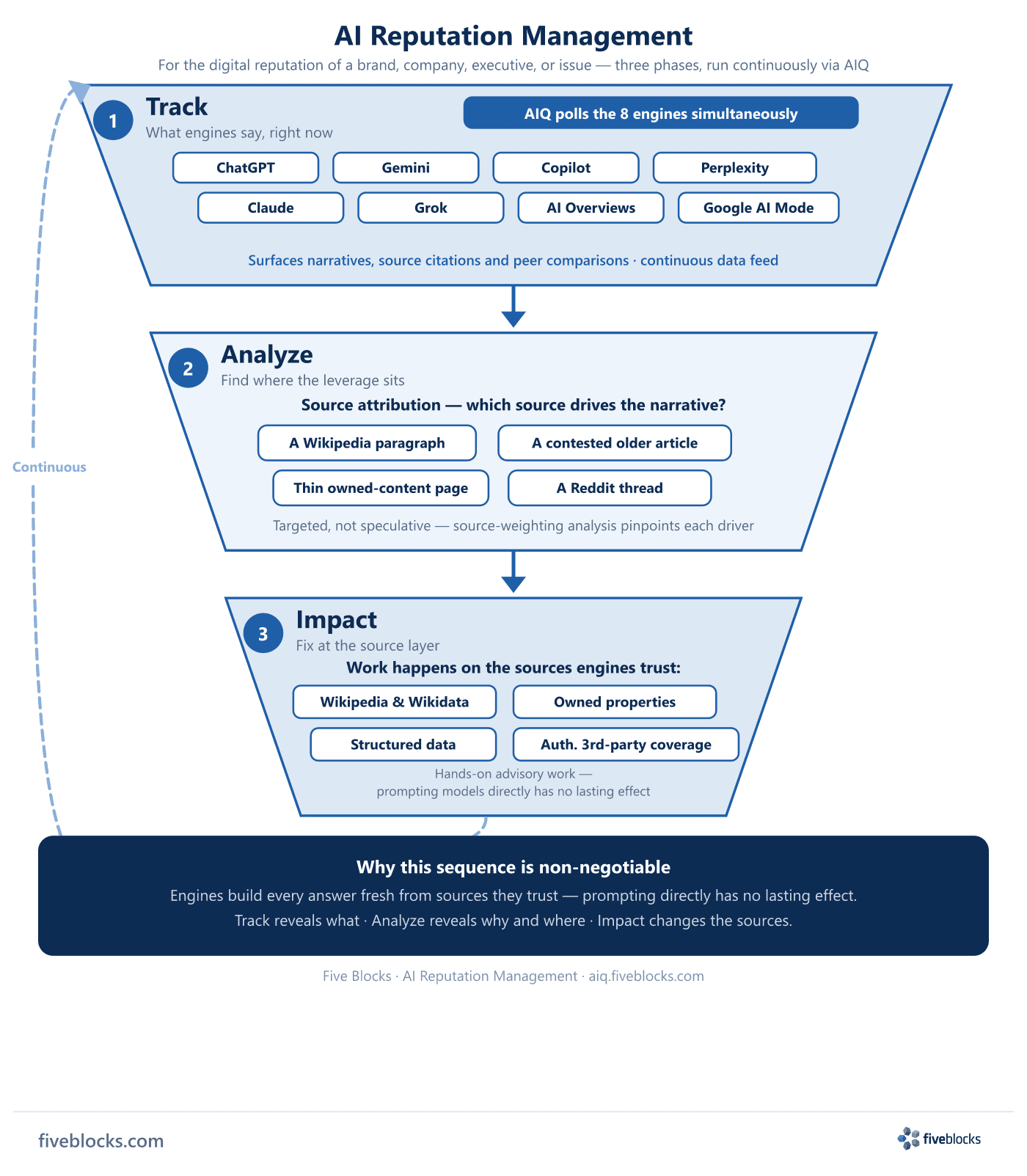
1. Track
Tracking what the major AI engines are actually saying, which sources they cite, and how the picture moves over time. The engines AIQ currently tracks are:
- ChatGPT
- Gemini
- Copilot
- Perplexity
- Claude
- Grok
- Google AI Overviews
- Google AI Mode
AIQ polls those eight engines at once and shows what each one says, which sources it draws on, and how the brand narrative compares to peers. That replaces a manual research task with a continuous data feed.
2. Analyze
Next, work out which sources are driving the parts of the narrative that matter. A single Wikipedia paragraph, a contested older article, a thin owned-content page, or a Reddit thread can each shape what the engines conclude. This analysis pinpoints the sources carrying the most weight for the prompts that matter to the brand, so the intervention work is targeted rather than a guess.
3. Impact
You cannot fix what AI says by prompting ChatGPT or telling the engine it is wrong; it does not remember, and it builds every answer fresh from the sources it trusts. The work happens at those sources: Wikipedia and Wikidata, owned properties and their structured data, and the authoritative third-party coverage the engines rely on. AIQ handles the tracking and analysis layers continuously; the intervention work is hands-on advisory work executed against the specific sources AIQ has identified as the drivers.
Last reviewed: 19/05/2026
