How does ESG and sustainability positioning affect real estate reputation?
ESG positioning in real estate is shaped by three converging pressures: institutional investor demand, regulatory movement toward mandatory disclosure, and tenant preference among large corporate occupiers. The reputational risk sits in the gap between stated commitments and documented outcomes, and that gap is where greenwashing accusations form. Content built on measured results holds up over time; announcements alone do not.
ESG and sustainability are now a reputational axis in real estate because three forces hit the firm at once: institutional investors screen for ESG credentials before they deploy capital, regulation is moving toward mandatory disclosure in major markets, and large corporate tenants weigh sustainability performance in leasing decisions. A firm sitting at that intersection has a real reputation asset. It is also a fragile one, because commitments that outrun documented outcomes turn into a liability.
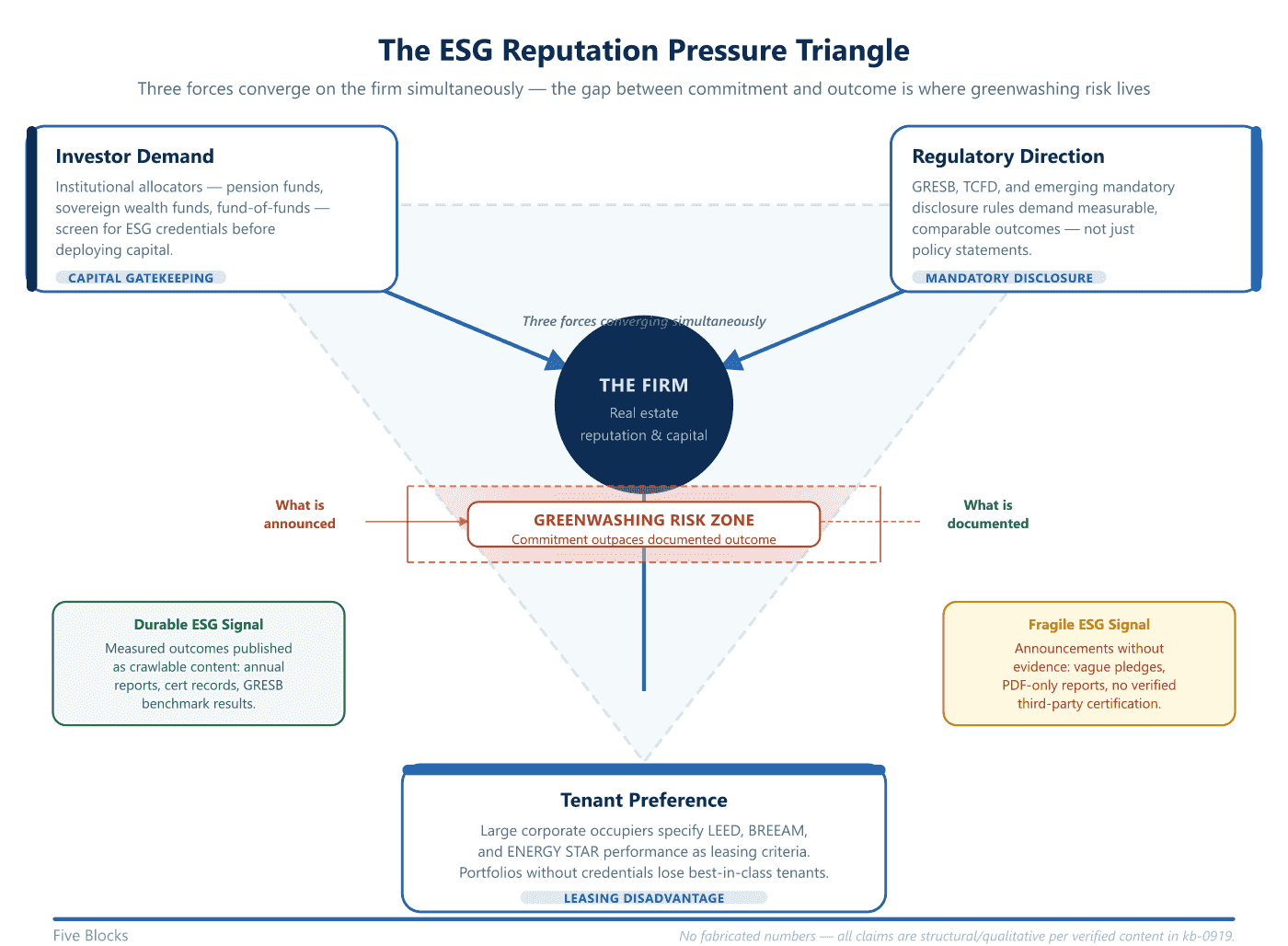
The three ESG pressures on real estate reputation
- Investor demand: Institutional allocators (pension funds, sovereign wealth funds, large fund-of-funds) increasingly make ESG reporting a condition of capital deployment. A firm that cannot produce credible, comparable ESG data gets screened out before diligence begins.
- Regulatory direction: Disclosure frameworks keep multiplying. GRESB (Global Real Estate Sustainability Benchmark) has become the de facto standard for benchmarking portfolio sustainability performance across markets. The TCFD (Task Force on Climate-related Financial Disclosures) framework, now embedded in regulatory requirements in several jurisdictions, asks firms to disclose climate-related risks and governance. The SEC’s climate-related disclosure rules point toward mandatory reporting for US-listed real estate firms. What the frameworks converge on is a single expectation: measurable outcomes rather than policy statements.
- Tenant preference: Large corporate occupiers, especially those carrying their own net-zero or carbon-reduction commitments, now specify building certifications (LEED, BREEAM, ENERGY STAR) and operational performance data as leasing criteria. A portfolio that cannot show those credentials competes at a disadvantage for the tenants it most wants.
The commitment-versus-outcome gap: where greenwashing risk lives
The reputational danger is the distance between what a firm announces and what it can document. ESG commitments published without supporting outcome data (energy reduction percentages, emissions figures, certification progress, scope-three reporting) draw scrutiny from investors, journalists, and regulators who are now well equipped to test claims. Vague sustainability language also ages badly. A 2021 pledge to reach net-zero by 2040 means little to a model that can find the announcement and nothing after it.
What works instead is authoritative content built on measured outcomes alongside the commitments: annual sustainability reports tied to verifiable data, third-party certification documentation, and project-level performance records the AI engines can cite when they answer ESG questions about the firm.
What AI engines are reading, and what to build
AI models assemble a firm’s ESG posture from whatever sources they can find. A firm that has done real sustainability work but documented it poorly gets the same thin, hedged answer as one that has done nothing. Four content disciplines change that:
- Annual sustainability reports published as crawlable web pages rather than PDF downloads alone, with specific metrics named and dated.
- Project-level certification and performance pages that tie buildings to third-party-verified data: LEED scores, ENERGY STAR ratings, GRESB benchmark results where the firm participates.
- Earned coverage in credible real estate trade outlets that cites actual performance numbers rather than strategy announcements. That gives the engines third-party sources to work from.
- Structured disclosure documents aligned to recognized frameworks such as TCFD and GRESB, which make the data comparable and searchable.
We monitor AI engine answers on climate and sustainability prompts with AIQ™. The gap between what a firm has done and what the engines say it has done is a measurable reputation problem, and it closes once the source layer is built.
Last reviewed: 20/05/2026
