How do you create a microsite for reputation management purposes?
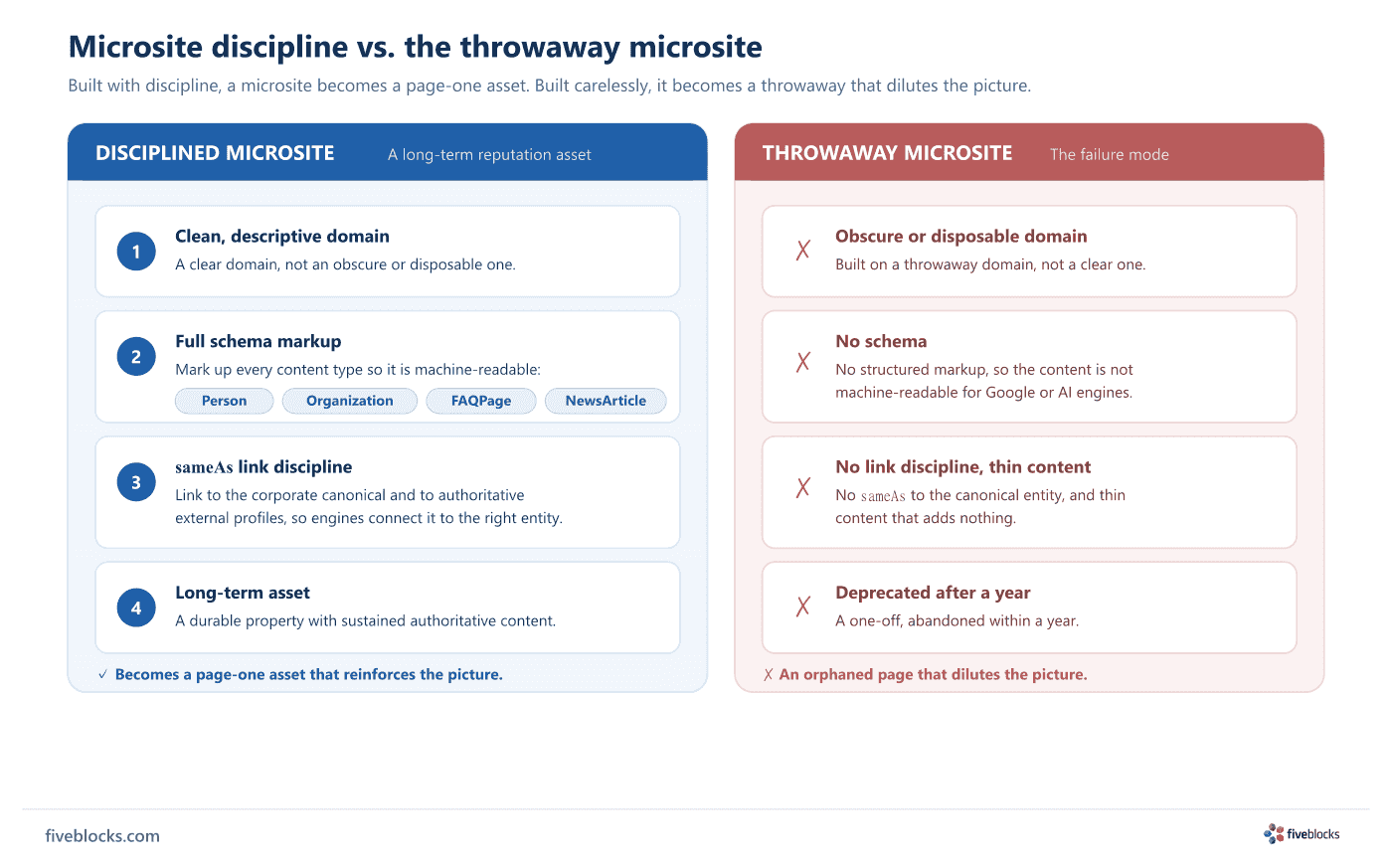
A reputation microsite focuses a single narrative - an executive, an initiative, a response, or a brand-within-the-brand - on a clean, descriptive domain, marks up every content type with the right schema (Person, Organization, FAQPage, NewsArticle), links sameAs to the corporate canonical and authoritative external profiles, and is maintained as a long-term asset. The failure mode is the throwaway microsite: thin content, no schema, no link discipline, deprecated after a year.
Microsites are used in reputation work when the main corporate domain is not the right home for a specific narrative. Built with discipline, a microsite earns a place on page one. Built carelessly, it adds nothing.
When a microsite is the right tool
- Executive story. A dedicated site for a high-profile executive whose individual story matters separately from the corporate brand.
- Defining initiative. A campaign site for an initiative that warrants its own presence.
- Contested topic. A response site addressing a specific contested topic directly.
- Brand within the brand. A site for a business unit that needs independent visibility from the parent.
The discipline that makes it work
- Clean, descriptive domain. Build on a clear domain rather than an obscure or disposable one.
- Full schema markup. Mark up every content type with the right schema: Person, Organization, FAQPage, NewsArticle. This makes the content machine-readable for both Google and AI engines.
- sameAs link discipline. Link
sameAsto the corporate canonical and to authoritative external profiles, so engines connect the microsite to the right entity. - Long-term asset. Treat the microsite as a durable property with sustained authoritative content, not a one-off.
The failure mode
The throwaway microsite is the opposite of all of this: thin content, no schema, no link discipline, deprecated after a year. Done right, a microsite holds page one and supports the wider reputation picture. Done wrong, it is an orphaned page that dilutes it.
Last reviewed: 19/05/2026
