What does Five Blocks mean by Synthesized Reputation?
Synthesized Reputation is Five Blocks' term for the brand identity AI engines build by combining many sources into a single composed answer. That composed answer can differ from any individual source, and it is what most stakeholders now read.
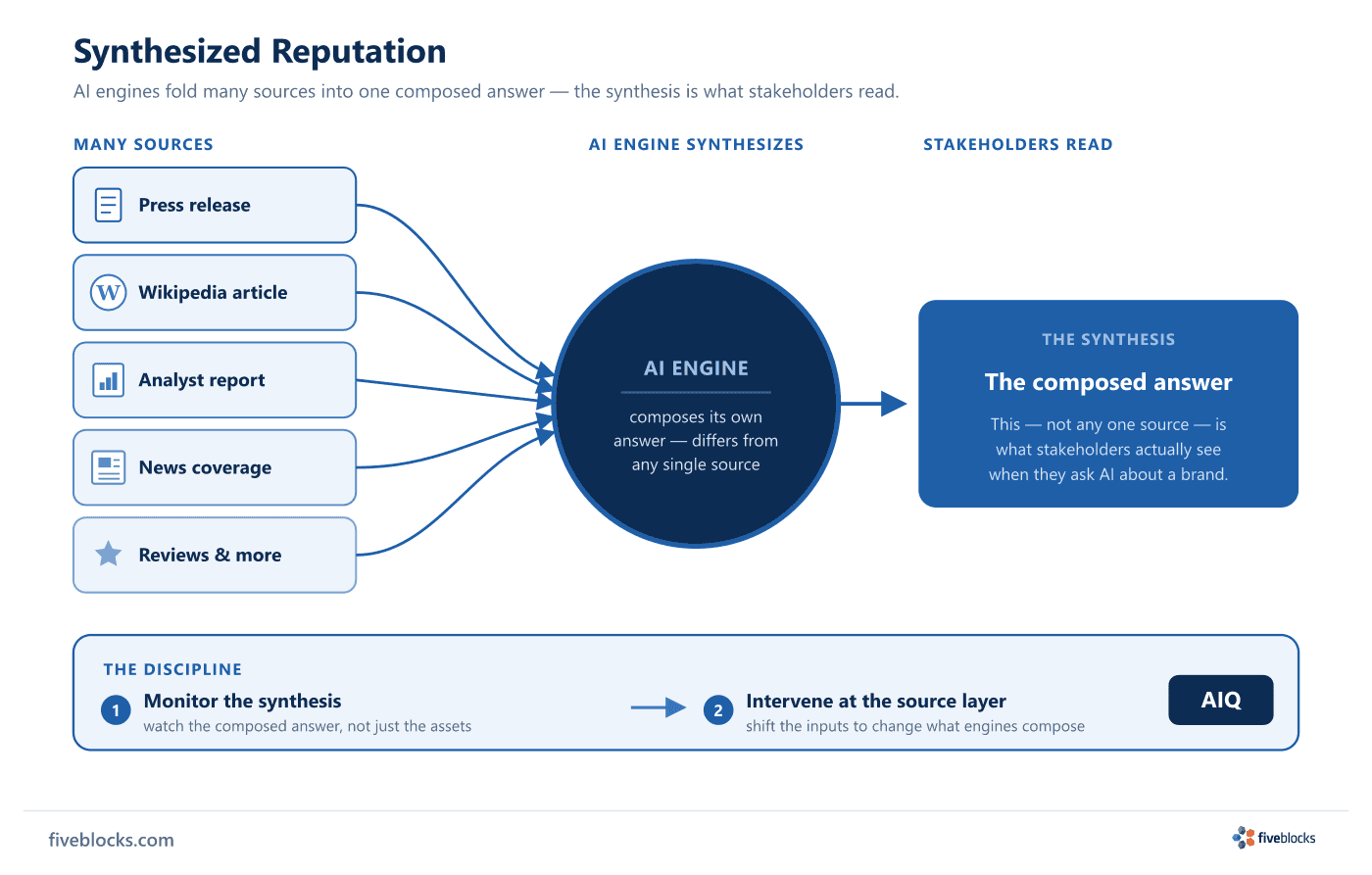
Synthesized Reputation is a term Five Blocks uses for a pattern that shows up across client work: AI engines do not retrieve one source and hand it to the user. They combine many sources into an answer that is the engine’s own composition, and that composition often differs from any individual source.
Why the synthesis matters
What a stakeholder reads when they ask an AI about a brand is not the press release, not the Wikipedia article, not the analyst report. It is the engine’s combination of these and many other inputs. That combination can go two ways:
- More accurate than the best single source, because the engine draws context from many sources.
- Less accurate than any source, because the engine can hallucinate, conflate, or weight sources badly.
The discipline it requires
Because the composed answer is what stakeholders see, reputation work has to go beyond managing individual sources. It now means:
- Monitoring the composed answer itself, not just the underlying assets.
- Identifying which sources are driving it.
- Working on those sources to shift what the engines compose.
- Measuring change at the answer level, not only the source level.
Five Blocks built AIQ to do this work.
Last reviewed: 19/05/2026
