The Speed Tax: Your Slow Corporate Site Is Hurting You in AI Search
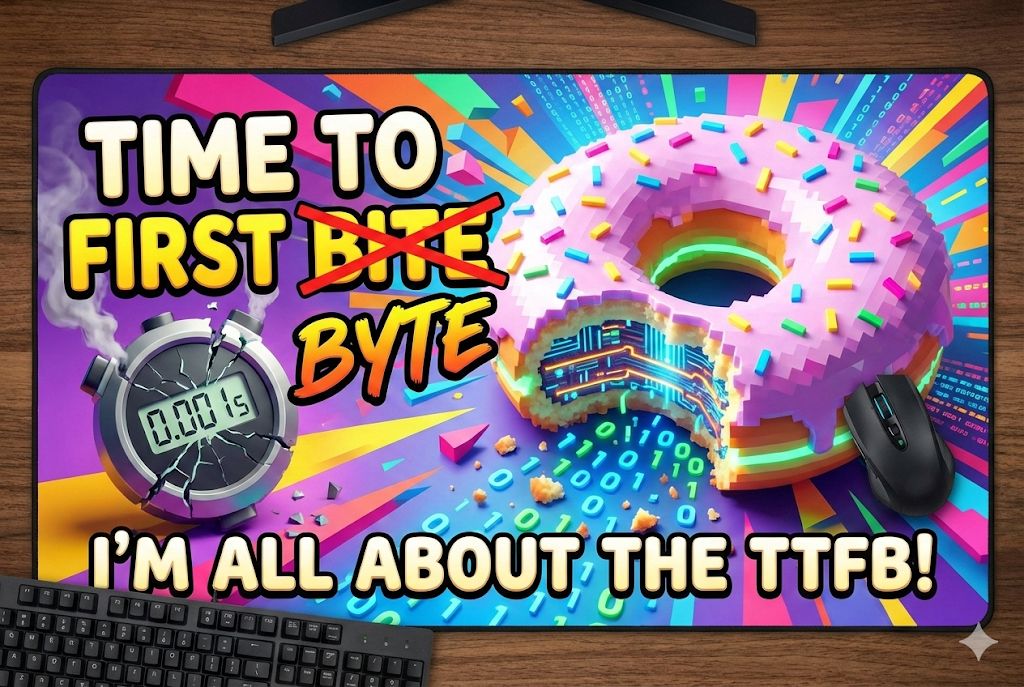
Sometime milliseconds matter more than money — how Time to First Byte is quietly reshaping brand visibility in the AI era…
For years, the playbook was simple: optimize for Google, rank on page one, and let the traffic roll in. But as millions of consumers now get their answers from ChatGPT, Perplexity, and Google’s AI Overviews instead of scrolling through search results, a new technical reality is emerging, and it’s catching many of the world’s largest companies off guard.
If your corporate website is too slow, AI systems may never see your content at all.
The culprit? A metric most communications professionals have never heard of: Time to First Byte.
What Is TTFB, and Why Should You Care?
Time to First Byte (TTFB) measures how quickly a server begins responding after receiving a request. When someone, or something, asks your website for information, TTFB captures the milliseconds between the request and the very first byte of data being sent back.
For human visitors, a slow TTFB means frustrating load times. For AI crawlers, it means something far more consequential: your content may simply be skipped.
Here’s the technical reality that’s reshaping digital reputation: AI systems operate under strict latency budgets. When ChatGPT or Perplexity need to fetch real-time information to answer a query, they can’t wait around. If your server takes too long to respond, the crawler moves on. Your carefully crafted content, your company’s narrative, your leadership’s bios, your crisis messaging, never enters the AI’s knowledge base.
Google recommends a TTFB of 200 milliseconds or less. Industry benchmarks suggest anything above 500ms is problematic. Yet our analysis of Fortune 500 corporate websites reveals that many fall well above these thresholds, with some enterprise sites clocking in at 1.5 to 2 seconds before delivering their first byte of data.
The AI Crawl Budget Problem
Think of it like a library with limited reading time. Traditional search engines like Google have decades of infrastructure investment and can afford to be patient, they’ll come back, render JavaScript, and eventually index your content. AI crawlers don’t have that luxury.
When OpenAI’s GPTBot or Anthropic’s ClaudeBot visits your site, they’re operating on what’s essentially a “processing budget.” These systems need to ingest, understand, and vectorize millions of pages. If your site is slow to respond, has massive file sizes, or requires extensive JavaScript rendering, the crawler may timeout or only partially index your content.
Recent research tracking over 500 million GPTBot requests found that sites with response times under 200 milliseconds receive significantly more complete indexing than slower competitors. The data is clear: faster servers help with freshness, retrieval quality, and the likelihood of your content appearing in AI-generated answers.
The JavaScript Blind Spot
Speed isn’t the only factor working against enterprise websites. There’s another technical hurdle that’s even more problematic: most AI crawlers cannot execute JavaScript.
Unlike Google’s crawler, which uses a sophisticated rendering engine that can process JavaScript-heavy pages, AI crawlers from OpenAI, Anthropic, and Perplexity essentially operate like it’s 2010. They fetch raw HTML and move on. They don’t wait for your scripts to load, don’t execute your React components, and don’t see anything that’s dynamically injected after the initial page load.
This creates a troubling scenario for modern corporate websites. Many enterprise sites rely on JavaScript frameworks to deliver content, product information, executive bios, news releases, even basic navigation. To a human visitor with a browser, the site looks beautiful and fully functional. To GPTBot, it’s a blank page with a header and footer.
An analysis by Vercel and MERJ found zero evidence of JavaScript execution by GPTBot across half a billion requests. The same limitation applies to ClaudeBot, PerplexityBot, and most other AI crawlers. If your content requires JavaScript to display, AI systems simply cannot see it.
A Real-World Example: The Invisible Product Launch
Consider this scenario: A major consumer brand launches a new product line. They invest heavily in a sleek, modern microsite with interactive features, animated product showcases, and JavaScript-powered content sections. The site looks stunning. Traditional SEO is optimized. Press coverage links back appropriately.
Three months later, when consumers ask ChatGPT “What’s new from [Brand]?” or Perplexity “Tell me about [Brand’s] latest products,” the AI responses reference old information, or worse, a competitor’s offerings. The microsite, despite its beauty and its Google rankings, never made it into the AI’s knowledge base.
The brand’s communications team is baffled. The problem? The microsite’s TTFB averaged 1.2 seconds, and the product descriptions were rendered entirely via JavaScript. From the AI crawler’s perspective, the launch might as well never have happened.
What This Means for Reputation Management
At Five Blocks, we’ve spent years helping brands understand how digital platforms shape their narratives. The rise of AI-powered search represents the most significant shift in information discovery since Google’s emergence, and it brings new technical requirements that go beyond traditional SEO.
The implications for reputation are substantial:
- Controlled narratives may not reach AI audiences. If your carefully managed corporate website is slow or JavaScript-dependent, the definitive information about your company may never enter AI training data or real-time retrieval systems.
- Faster competitors get cited first. When AI systems need to answer questions about your industry, they’ll pull from sources that are accessible. If your competitor’s content loads in 150ms with clean HTML while yours struggles at 800ms behind JavaScript rendering, their narrative shapes the AI response.
- Crisis content timing becomes critical. During a reputational crisis, every hour matters. If your response statement lives on a slow, JavaScript-heavy newsroom page, it may take significantly longer to propagate into AI systems, if it propagates at all.
- Wikipedia and third-party sources gain outsized influence. When AI crawlers struggle to access primary corporate sources, they lean more heavily on Wikipedia, news coverage, and other third-party content. You lose control of your own story.
The Technical Fixes That Matter
Addressing these challenges requires coordination between communications teams and IT infrastructure. Here’s what actually moves the needle:
Optimize Server Response Times. Target a TTFB under 200ms. This may require CDN implementation, server-side caching, and infrastructure upgrades. Many enterprise WordPress sites, in particular, struggle with response times that can be dramatically improved through proper configuration.
Implement Server-Side Rendering. If your site uses JavaScript frameworks like React, Vue, or Angular, implement server-side rendering (SSR) to ensure that critical content is present in the initial HTML response. This lets AI crawlers see your content without waiting for JavaScript execution.
Audit What Crawlers Actually See. Disable JavaScript in your browser and visit your key pages. What remains is what AI crawlers see. If executive bios, product information, or corporate messaging disappear, you have a problem that needs immediate attention.
Prioritize Critical Content in HTML. Ensure that your most important reputation-relevant content, leadership information, company overview, key messaging, exists in static HTML rather than being loaded dynamically.
Monitor AI Crawler Access. Review server logs for GPTBot, ClaudeBot, and PerplexityBot activity. Are they successfully accessing your key pages? Are requests timing out? This data reveals whether AI systems can actually reach your content.
The Bigger Picture: Infrastructure as Reputation Strategy
For communications professionals accustomed to thinking about narratives, messaging, and media relationships, the idea that server response times affect reputation may feel foreign. But in the AI era, technical infrastructure is communications infrastructure.
The question isn’t just “What story are we telling?” but “Can AI systems even hear us?”
As AI-powered search continues to grow, and all indicators suggest it will only accelerate, brands that invest in technical accessibility will have a structural advantage. Their content will be more consistently indexed, more frequently cited, and more accurately represented in the AI-generated answers that increasingly shape public perception.
Those that don’t will find themselves shouting into a void, their carefully crafted messages trapped behind slow servers and invisible JavaScript, while faster, more accessible sources define their narrative instead.
Curious whether AI systems can access your corporate content? Five Blocks’ AIQ platform tracks how your brand appears across ChatGPT, Perplexity, Google AI, and other AI-powered platforms, including whether your key pages are being successfully indexed. Contact us for an assessment.
