How does reputation management work for private schools and universities?
Education reputation rests on academic-quality signals, Wikipedia accuracy, faculty visibility, and how the institution performs in AI ranking prompts. Wikipedia carries the most weight: the article ranks at the top of branded search, feeds the Knowledge Panel, and is heavily weighted by AI engines, so its accuracy shapes the first impression prospective families and students form. Families now ask AI engines 'best schools for X' or 'is this university worth it,' and the answer influences enrollment the way published rankings long have.
Schools and universities are judged on a mix of measurable quality and hard-to-measure prestige, and prospective families now research both through search and AI engines before they ever contact an admissions office. The work sits in a few layers, and they feed each other.
Academic-quality signals
- Outcomes and accreditation
- Graduation rates, graduate employment data, and accreditation status are the factual anchors of quality. State them accurately and prominently in your own authoritative content, so search and AI engines have verified figures to cite instead of relying on someone else’s characterization.
- Distinctive programs
- Signature programs, research centers, and discipline-specific rankings give the engines something citable that separates the institution from peers with similar headline profiles.
Wikipedia accuracy
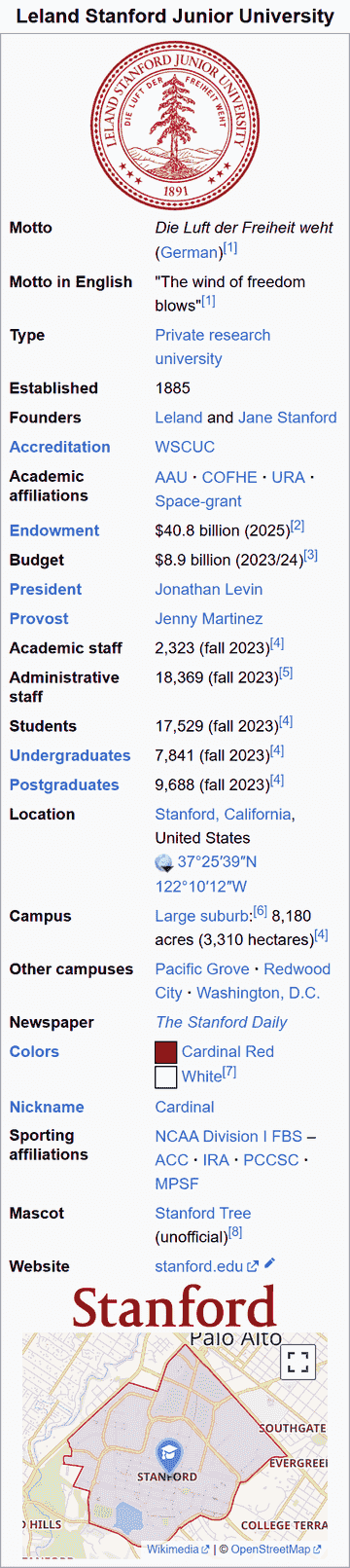
For most institutions, Wikipedia accuracy matters more than anything else on this list. The article ranks near the top of branded search, feeds the Google Knowledge Panel, and is among the most heavily weighted sources AI engines draw on when they answer questions about an institution’s standing, history, and quality. An error or a stale figure in the article travels straight into those engine answers.
The correct path for any interested party is disclosed conflict-of-interest editing: propose changes on the Talk page, backed by reliable secondary sources. Editing the article directly violates Wikipedia policy, and the editor community detects it. We watch the article continuously with WikiAlerts™ so unauthorized or inaccurate edits get caught before they compound.
Faculty visibility
- Credentialed faculty bios
- Named faculty bios tied to research, publications, and institutional affiliation back up the institution’s academic authority and give the engines attributable evidence about the caliber of instruction and scholarship.
- Named research and publications
- Research attributed to named faculty at the institution creates third-party citable material. It supports what the institution says about itself, and AI engines weight it more heavily than self-description.
Structured directory presence
Accurate, consistent listings in the directories and platforms that families and ranking systems consult keep the institution’s core facts aligned across the sources AI engines aggregate.
AI monitoring: the ranking and outcome prompt
The behavior that matters most now is the ranking and outcome prompt. Prospective families, and more and more high-school students doing their own research, ask AI engines questions like “best schools for environmental science” or “is this university worth the cost.” The answer shapes the shortlist before a campus visit or an application. We monitor those prompts with AIQ™. An institution’s standing in the engines influences enrollment the way published rankings have for decades, except that it moves faster and there is less transparency about what is driving the result.
Last reviewed: 20/05/2026
