Why does Five Blocks believe reputation management is a boardroom issue?
Search and AI now shape capital, talent, regulatory, and customer decisions before any human conversation begins, which makes digital reputation a first-order risk and asset that belongs in board-level reporting alongside other material risks, with KPIs, a reporting cadence, and a named executive owner.
The boardroom case rests on the channels through which reputation now operates. Across capital, talent, regulatory, and customer decisions, stakeholders increasingly form a view of a company from search results and AI engines before any human conversation begins. That makes digital reputation a first-order risk and asset rather than a communications concern, one that belongs in board reporting alongside other material risks, with KPIs, a reporting cadence, and named executive ownership.
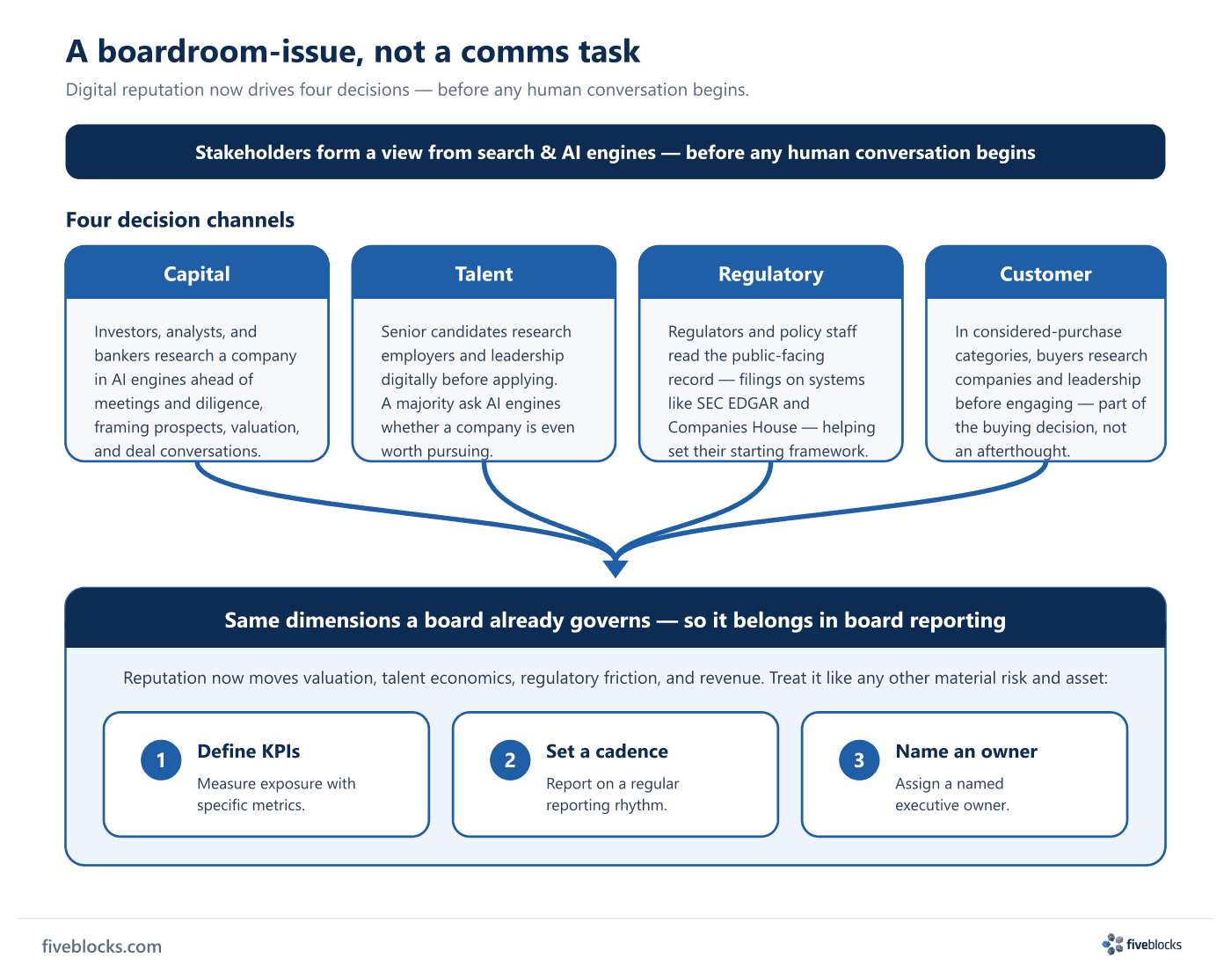
The four decision channels
- Capital
- Bankers, investors, and analysts research a company in search and AI engines before meetings begin; what they find can affect how a prospect, valuation, or deal is framed. Allocators and investors are documented prompting AI engines about prospective investments ahead of formal diligence, and buyers and counterparties increasingly use AI to accelerate diligence in some markets.
- Talent
- Senior candidates research employers and leadership digitally before applying or accepting, a majority report asking AI engines to judge whether a company is worth pursuing. The digital picture shapes the top of the recruiting funnel before a recruiter ever speaks to a candidate.
- Regulatory
- Regulators and policy staff read the public-facing record during investigations and rulemaking, and that record helps set their starting framework. Official systems such as SEC EDGAR (US) and Companies House (UK) make regulatory filings publicly accessible, so the documented record is part of how a company is perceived.
- Customer
- In considered-purchase categories, buyers research companies and their leadership before engaging, so the digital and AI picture is increasingly part of the buying decision rather than something encountered only after first contact.
Why it belongs in board reporting
When reputation operates through these channels, it becomes a factor in valuation, talent economics, regulatory friction, and revenue, which are dimensions a board already governs. The practical step is to treat it like any other material risk and asset: define KPIs, set a reporting cadence, and assign a named executive owner. In our work advising companies, the question has moved from whether reputation matters to how it should be measured and governed.
Last reviewed: 19/05/2026
