What Sources does Grokipedia use for its Fortune 100 Articles
As tools like Grokipedia begin to sit alongside Wikipedia, search results, and AI assistants, they are no longer just reflecting public information – they are actively shaping it. To understand what this shift means in practice, we analyzed how Grokipedia represents the Fortune 100, digging into nearly 19,000 sources to see where the information comes from, what gets emphasized, and how this new, AI-curated model differs from the human-edited standard brands have relied on for years.
Why Grokipedia matters
Grokipedia is making a bold wager: replacing Wikipedia’s human editors with algorithmic curation. Instead of volunteer consensus and strict sourcing rules, Grokipedia relies on AI systems to decide what information matters and which sources are credible.
That shift raises an important question for brands and communicators:
What actually happens to corporate narratives when AI, not humans, becomes the editor?
The big picture: more sources, different priorities
Grokipedia articles are not necessarily longer than their Wikipedia counterparts. But they are far more heavily sourced.
- Average sources per Fortune 100 company: 187
- Highest count: Apple, with 359 sources
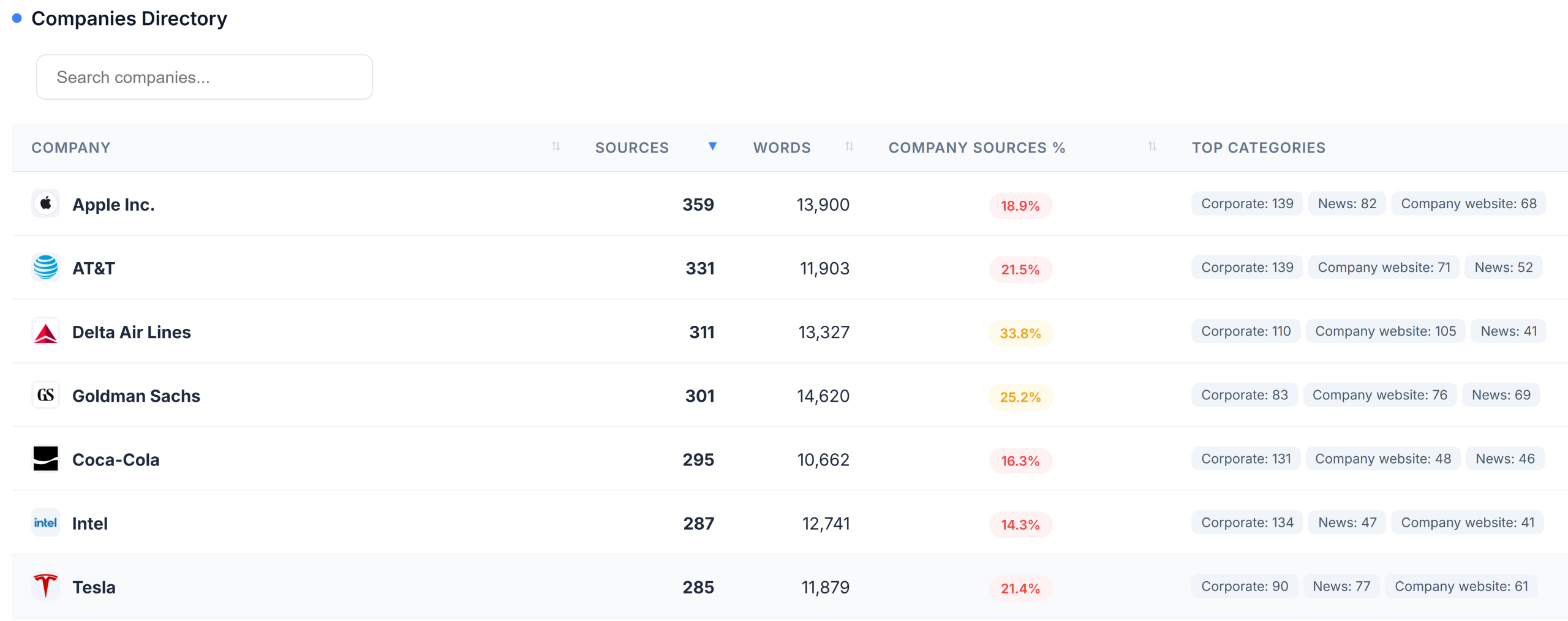
This volume alone signals something important: Grokipedia’s model values aggregation and breadth over editorial restraint. But the real story lies in what sources it chooses.
Where Grokipedia gets its information
Across all Fortune 100 articles, sources break down as follows:
- Corporate sources: 34.5% (6,477 citations)
- Company websites: 27.2% (5,112 citations)
- News media: 16.3% (3,050 citations)
- Government: 7.0% (1,319 citations)
- Financial / Academic / Trade: 7.5% (1,408 citations)
- Social media: 1.8% (335 citations)
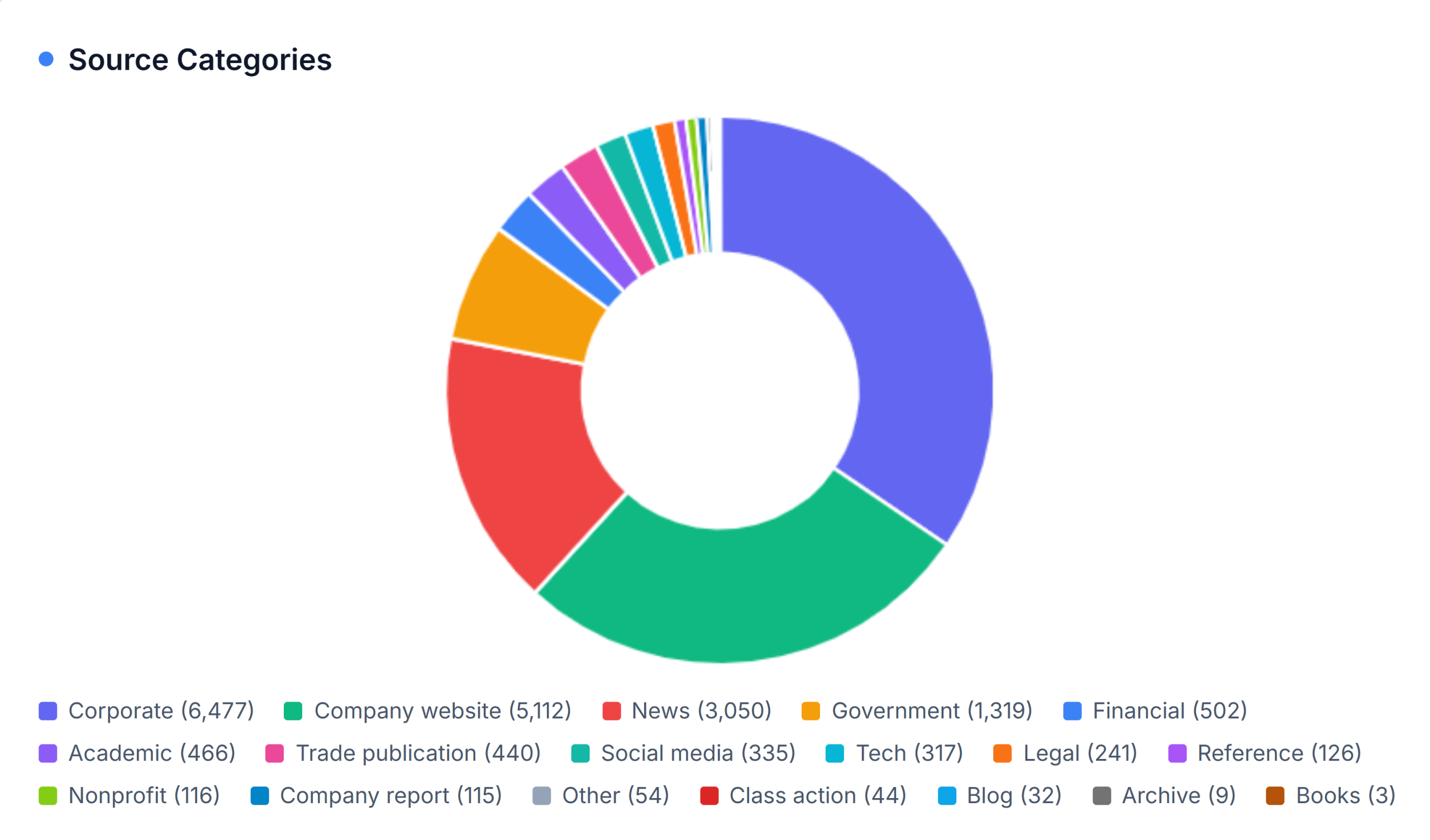
This alone marks a major departure from Wikipedia, which treats corporate and self-published sources as inherently suspect. Grokipedia does the opposite.
The most-cited domains across the Fortune 100
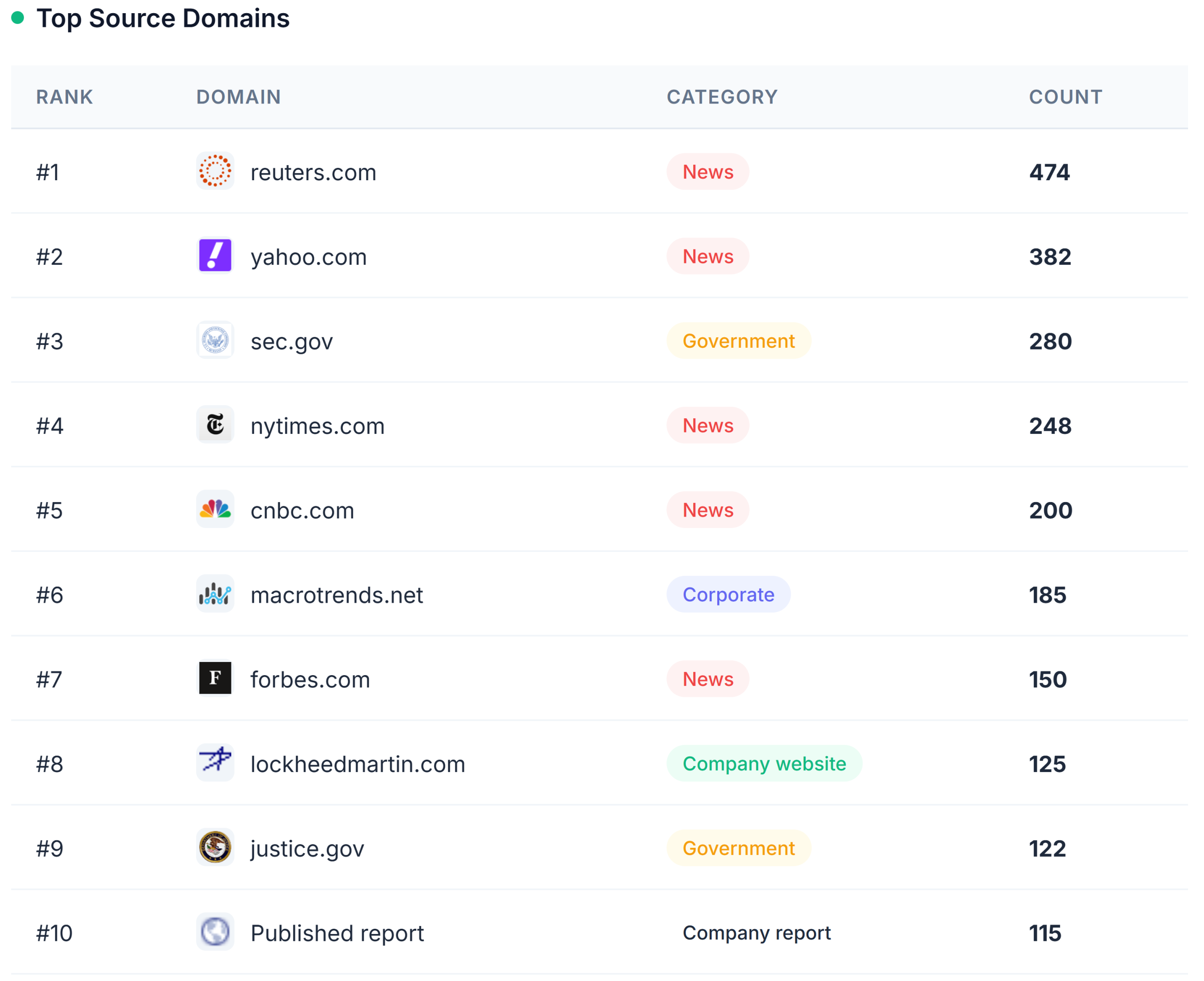
Here are the top 10 domains cited across all Fortune 100 Grokipedia pages:
- Reuters.com(474)
- Yahoo.com (382)
- SEC.gov (280)
- NYTimes.com (248)
- CNBC.com (200)
- Macrotrends.net (185)
- Forbes.com (150)
- LockheedMartin.com (125)
- Justice.gov (122)
- Published reports (115)
What surprised us most
A company website cracked the top 10 overall.
Lockheed Martin’s corporate site appears 125 times across Grokipedia—but not because it’s cited broadly. It’s because Grokipedia’s Lockheed Martin page relies heavily(!) on the company’s own materials.
Equally interesting: TD Synnex sources 60.8% of its Grokipedia citations from its own website
This represents a fundamental break from Wikipedia’s editorial philosophy. Where Wikipedia views corporate sites as biased and secondary, Grokipedia treats them as primary sources of truth.
Social media: barely present
Early critics worried Grokipedia would overweight X (formerly Twitter). The data tells a different story with social media accounting for under 2% of all citations
- LinkedIn leads with 75 citations
- Facebook – 40 citations
- Reddit – 38 citations
- YouTube – 31 citations
- X.com appears just 14 times
Despite Grokipedia’s ownership of X, social platforms are not driving corporate narratives on the platform itself.
PR Newswire is doing well!
Another sharp contrast with Wikipedia and Google Page 1:
PR Newswire ranks #7 among news sources, with 95 citations
Wikipedia rarely allows press releases as sources, while Grokipedia treats them as legitimate references – giving companies a direct channel into AI-generated “encyclopedic” content.
What this means for communications teams
The shift from human-curated to AI-curated knowledge changes the playbook.
1. Your corporate website now matters more than ever
It is no longer just a destination – it can become the primary source for LLMs.
2. Government filings carry outsized influence
SEC.gov (#3) and Justice.gov (#9) rank among the most-cited domains.
AI systems read and index everything, including filings, enforcement actions, and regulatory language.
3. Earned media still matters – but the mix is changing
Reuters and legacy outlets dominate, but trade publications and financial data aggregators (440 citations combined) remain highly influential.
4. Wikipedia is no longer the single source of record
Fixing Wikipedia is no longer sufficient. Grokipedia and similar AI-driven platforms are building parallel narratives, governed by entirely different editorial logic.
Explore the data yourself
We’ve created an interactive dashboard where you can dig into all of the data here!
The dashboard allows you to look at each company individually as well!
