How do you use data-driven content to build credibility and authority?
Data-driven content (proprietary research, surveys, benchmarks) builds durable authority because original data is both hard to replicate and credible to cite. Journalists cite it, which generates earned coverage and backlinks; the AI engines treat substantive data as high-quality source material; and a strong dataset keeps accumulating citations for years, making the brand the primary reference on its topic.
Data-driven content builds credibility and authority because original data is both hard to replicate and credible to cite, which makes it some of the most defensible reputation material a brand can produce. A strong proprietary dataset or survey sets off a chain of value that compounds over time.
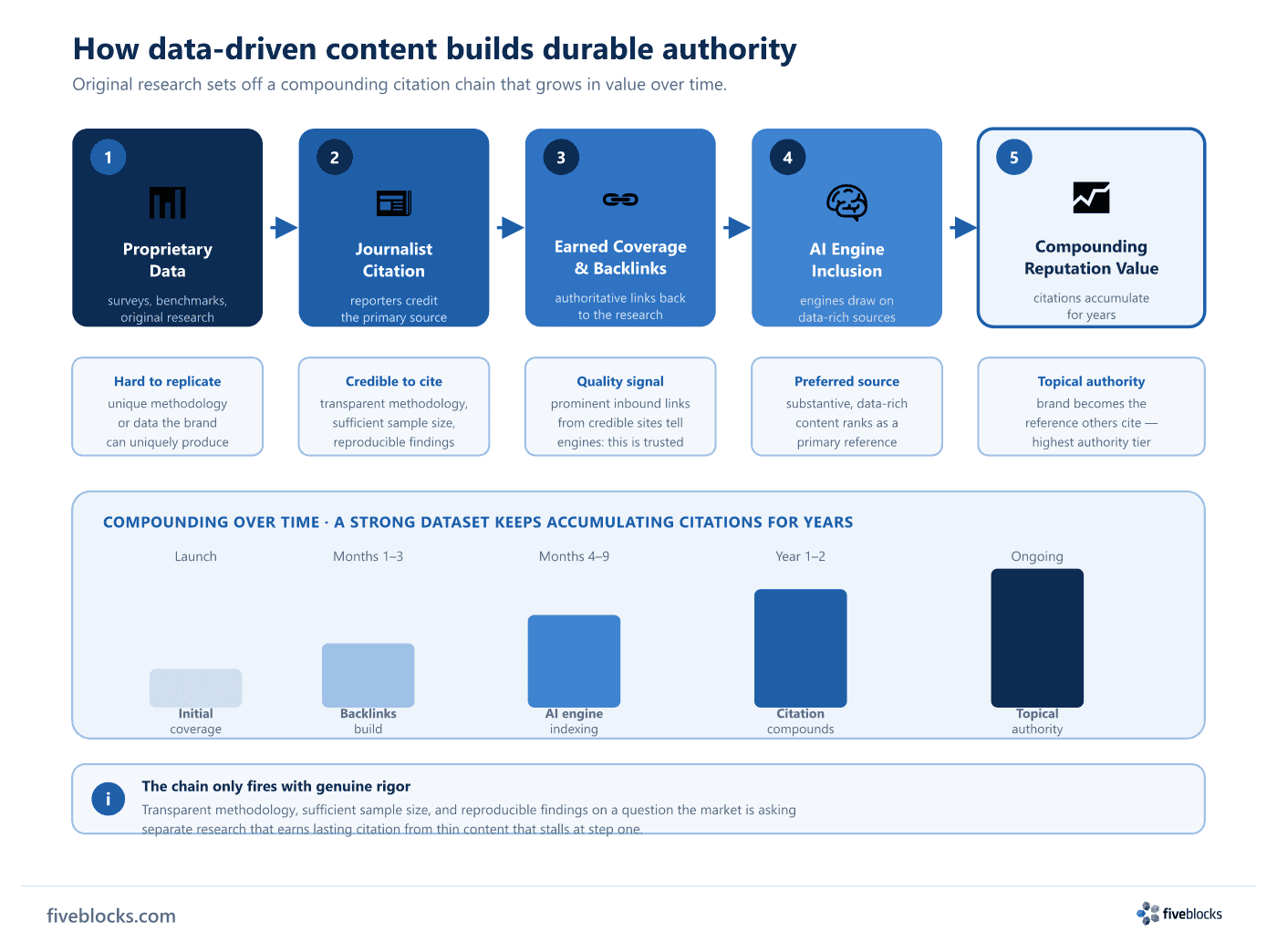
How the citation chain works
- Proprietary data: original surveys, benchmarks, or research findings the brand is uniquely positioned to produce.
- Journalist citation: reporters and industry analysts cite original data because it gives their story a primary source they can credit. This starts the earned-coverage cycle.
- Earned coverage and backlinks: the coverage generates authoritative third-party links back to the research. Google treats prominent inbound links from credible sites as a quality signal:
one of the factors used to determine quality is understanding if other prominent websites link or refer to the content. This is generally a good sign that the information is trustworthy.
- AI engine inclusion: substantive, data-rich content is the kind the AI engines prefer to draw on. The research ranks as a primary source, and the engines cite it when answering questions on the topic.
- Compounding reputation value: a strong dataset keeps generating new citations for years, building the brand’s position as the source others reference, the highest tier of topical authority.
What makes research credible to journalists and AI engines
The rigor of the underlying data decides whether the chain above fires or stalls. Credible research shares a few characteristics. These are practitioner indicators rather than a guaranteed formula, but they are what separates research that earns citation from research that does not:
- Transparent methodology: how the data was collected, who was surveyed, and over what period. Journalists and editors expect this, and research that buries or omits methodology rarely earns sustained citation.
- Sufficient sample size for the claim: the sample has to match the precision of the finding. Narrow claims drawn from small or unrepresentative samples invite credibility challenges that undercut citation value.
- Reproducibility: findings that another researcher could in principle replicate signal real rigor. Self-referential data that only the brand can produce, with no external check, is harder for a journalist to vouch for.
- Relevance to a question the market is already asking: research on a question reporters, analysts, and customers are actively trying to answer earns citation because it fills a real gap, not a manufactured one.
Thin or self-serving research dressed as a study carries little signal and can damage credibility once its weaknesses show. The discipline is real rigor: real data, collected defensibly, on a topic where the brand has standing to speak.
How we build and track it
We treat original research as a high-value source-layer investment, build it around topics where the client has genuine standing, and track how it generates citation and shifts topical authority across search and the AI engines with IMPACT™ and AIQ™.
Last reviewed: 20/05/2026
